Showing posts with label cancer. Show all posts
Saturday, May 14, 2011
I am Remarkably Slow on the Uptake
I choked up at the frozen food aisle when I was shopping tonight. I haven't cried in a grocery store in a very long time, but tonight I did. It was the frozen dinners.
My dad's been dead almost ten years now, but I guess even when you think you're done grieving, you're not. There's still lingering regret to deal with.
It was a rough time, my dad's illness. His actual illness was fairly merciful, for cancer. After seeing what my mom had gone through just a little over a year before, we were both grateful that dad wasn't in pain, wasn't terrified, just slowly dwindled until he drifted away altogether.
We were both still in shock over Mom, and I think he took some strange comfort in the thought that he wouldn't be apart from her long. I didn't have that - I knew I'd be left to deal with it all in a way I just couldn't deal with it as it happened. There was too much to do.
I was working full time, my kids were teenagers, I was an only child - there were no brothers or sisters to call on for help. So I raced through the days like a robot, trying to do everything that was needed and keep a brave face on for everyone. I did a lousy job, I know now, but I tried really hard.
Each night, before making dinner for the family, I walked across the driveway to Dad's apartment and made him dinner. I sat with him while he ate it and we chatted. I was the only company he had all day unless you count the nurses as he got sicker. He really looked forward to me stopping by on my lunch hour and spending a half an hour or maybe an hour in the evening. I didn't mind, either.
But I didn't really cook. I guess I did a few nights a week, but today in that freezer aisle I remember how he'd ask me to get a particular brand of frozen dinner because he really liked it. He'd ask for them a few times every week.
What he liked was knowing that it wouldn't taste bad and I wouldn't have to cook it. He knew I was running on empty. And today was the first time I realized it.
We didn't get along at all when I was growing up, my dad and I. I think maybe we were too much alike in all the worst possible ways - insecurity,sensitivity, neuroses. I didn't want to be like him. I wanted to be like my mom.
All the defenses dropped at the end for both of us, and we liked each other a lot. And I'm sorry, so sorry, now, that I wasn't able to make him amazing, tasty meals every single night.
But I was so lucky. The night before he died I had the chance to ask him, "Did I do alright, Dad?" And he said in the strong voice I hadn't heard in a long time, "You did great." I guess he knew I did the best I could.
I just wish I could have done better. He was a good man.
Labels:
cancer,
daughters,
dying birds,
fathers,
fathers and daughters,
frozen dinners,
grief
Wednesday, February 17, 2010
Again, Ruth Says It Better Than I Can - Ring That Bell!

I love this blog.
And because I'm whirling like a dervish today, don't have time to explain but want you to know, I'm going to ask you to go see Ruth and read why you need to be ringing a bell tomorrow.
Ring The Bell For All of Us
Labels:
barry,
cancer,
explorers life,
great blogs,
hope,
synchronicity
Thursday, February 12, 2009
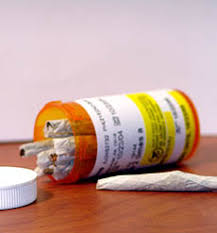
The Economics of Marijuana

A recession can do funny things to people. It can make some staunch red states rethink their stance on marijuana.
Okay, let me preface this with a disclaimer: I am not a pothead. I'm not a liberal, raving "right to get high" activist. I'm a pragmatist.
And so, apparently, are Tennessee, Alabama and Texas, among other states. They're looking at the looming catastrophes that are their budget deficits, comparing those with what they HAVE to spend by state and federal mandate, and looking for places to cut. And that's where marijuana comes in.
Law enforcement across the nation spends up to seven billion dollars a year enforcing laws against marijuana, according to a study done by Doctor John Getman.
And states are now considering whether they can afford to keep enforcing that prohibition, according to NORML, the marijuana law reform lobbying group. They're getting phone calls from states they never expected to hear from, legislators looking for the hard facts about marijuana, medical marijuana, scientific data...information they are using as they decide whether it's time to decriminalize marijuana.
There's a precedent for this. FDR partially repealed prohibition during the Great Depression. It made sense. It was an industry that was in demand, it was an industry that could be taxed. And regulating that industry eliminated the criminal distribution of booze.
This seems to make sense with marijuana, too. Studies don't agree on the "gateway drug" argument - in fact, the biggest study on the topic concluded there was absolutely no evidence that marijuana use led to harder drug use. There is apparently no evidence that anything in the chemical makeup of marijuana leads to cocaine, crack, heroin, meth or any of the other drug scourges of our time. The actual gateway drugs were cigarettes and alcohol.
And there is a great deal of evidence that medical marijuana is a gift for cancer patients. It relieves nausea, restores appetite and does it instantly, with no need for a queasy patient to swallow anything. And it's far cheaper than a legal marijuana alternative pill that often isn't covered by insurance.
Millions of people use pot. Millions of them. Nobody's monitoring it except the police. Tons of illegal marijuana is brought into this country from elsewhere, and there is no quality control.
There is money to be made. Think of the money if pot was taxed at the same exorbitant rate as cigarettes. California has medical marijuana and though it accepts tax payments from those clinics, it doesn't officially tax it. And safety standards, legal regulations could be put in place.
Want to do some investigating? Here are two studies:
Http://prohibitioncosts.org http://drugscience.org
And here are the facts presented with no bias for either side.
http://procon.org
Labels:
california,
cancer,
drug laws,
drug use,
economy,
marijuana,
marijuana law reform,
medical marijuana,
norml,
pot,
recession,
susan barnett,
weed
Friday, September 12, 2008
9-11 Seven Years Later
I didn't want to do the usual maudlin tribute to the victims of the World Trade Center attacks in 2001. I had to cover the anniversary, of course. It's news. But the story is what's happening today. The people who survived are dying.Experts tell me that people exposed to the toxic plume resulting from the towers' collapse are seeing their health problems multiply at an alarming rate. They are not only the survivors of the attack, but the rescuers and even people who were there and tried to help.
What they breathed in, usually without any masks, was a potent, lethal combination of carcinogens and poisons that are causing asthma, tumors, and cancers that are usually considered quite rare.
And they're fighting to prove that they're sick because of the 9-11 attacks.
Politicians are beginning to get louder on the issue, calling for more programs to help them, more counseling, more money for medical aid. But so far that call isn't being answered quickly enough to help all the people who need it.
I spoke with Jim LePena...an electrician from the Hudson Valley. He jumped in his car and drove to Manhattan on 9-11, just to do what he could to help. He's able to work now, but barely. He has asthma. He's had benign tumors removed from his brain. He says he has to fight to prove his health problems began after he worked digging through the rubble from the towers.
Tumors grow faster in people exposed to the plume. Their immune systems are compromised.
And federal aid earmarked for responders and survivors who live outside of New York isn't getting to them. An advocate told me Tommy Thompson and Logistics Health, the private contractors hired to administer the money, have swallowed up the money and it hasn't been seen since.
The Red Cross had millions of dollars for programs to help 9-11 victims. There were hundreds of programs. Seven years later, that money has run out. And those programs are shutting down.
And that's what's happening seven years after the Twin Towers were destroyed.
Subscribe to:
Posts (Atom)