I've got the ocean on my mind lately. Spending a day on the shore will do that to you - that salt air and that constant low tidal rumble stay with you long after you've left. I live within a day's drive of the Northern Atlantic, but I still only get there once or twice each year and each visit is a cherished memory.
This year we stayed on Cape Cod and spent a simply perfect day on Martha's Vineyard. I love my mountains, but I'd leave them behind for a life by the sea in a heartbeat.
When I got home and turned my attention to my radio show, I found a feature story on a Maine woman who has made her living harvesting sea snails, known as periwinkles or "wrinkles", in a sleepy little northern town called Lubec. I've been to Lubec - it's not a tourist town by the sea, it's a working village where the people rely on the sea for their livelihoods. But according to the story I found, fishing is dying there. As one species after another is overfished, the economy crashes further and Lubec's people are struggling.
Julie Keene and her son got by harvesting periwinkles - not getting wealthy, but not starving. Then the rockweed which is essential to the periwinkles' habitat began to disappear.
Apparently rockweed, that bladder covered seaweed that proliferates along the rocky Atlantic coast, is valued by industry as an emulsifier. Commercial harvesters are cutting rockweed off the rocks, leaving a barren landscape of stubs and wiping out a unique habitat.
Julie Keene, a rough, independent woman, has traded her harvesting basket for a camera and has been photographing the devastation left by the commercial harvesters. She testified at the state capitol in hopes of convincing legislators to ban the harvesting of rockweed.
She's not alone. There's a coalition trying to raise awareness of the issue.
There is a pile of swirling garbage hundreds of miles across in the Pacific. There's another in the Atlantic. Industry is scalping the rocks for the plants that grow there. There are environmental emergencies all around us. And it feels too damned big to do anything about.
But Julie Keene is doing something. We can, too, even if it's only to learn more and spread the word.
Showing posts with label maine farmers. Show all posts
Sunday, July 3, 2011
Monday, January 25, 2010
An American Tragedy

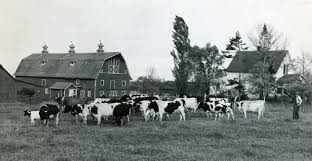
This sylvan, romantic view of rural America may be your vision of a dairy farm. A far less pretty picture exists today and it was illustrated by the death of a New York dairy farmer.
Dean Pierson will be buried this week. Police say he was a troubled man. But people who knew him, fellow farmers, say his despondency was in no small part a result of the crisis that every small dairy farm has been living with for the past year.
Pierson left a note on the barn door, telling whoever found it not to come in, to call the police. Police say he killed his 51 milk cows, the cows that he milked every morning and every night. Then he turned the gun on himself.
He spared fifty others; heifers and calves who wouldn't suffer if he wasn't there to milk them every day.
It's not an isolated incident. Another dairy farmer in Maine, one who's desperately scrambling to market a new independent label, Moo Milk, after he and his neighbors were dumped by Hood, said there have been other farmer suicides in Maine. He says he's heard of similar stories in California. A New York hotline for farmers reports suicides are up.
The few milk distributors who control the market are showing a profit. Supply is down, gas prices are down, too. But dairy farmers are actually losing money - it costs them more to produce milk than they can sell it for.
I come from a farm family; my mom grew up on a farm. My cousin still farms, though it's become a very different world and he now plows hundreds of acres that he doesn't own.
I hate factory farms; they're inhumane, they unsafe, they're unsustainable. I do not believe that "milk does a body good". But I am so sorry for those few farmers who are trying to continue a lifestyle they've loved, that many of them have learned from their fathers, their grandfathers, for generations.
My condolences go out to Dean Pierson's family. His widow told the local paper she's hoping she can keep the farm going. I understand. It's the life she knows; it's the life her husband loved.
Something is very wrong. Farmers will tell you the problem is they're regulated while the market is flooded with milk from overseas that isn't regulated at all. Experts will tell you there's hardly anyone who understands milk pricing anymore.
Legislators call for an anti-trust investigation of the handful of companies that control the entire industry. Critics will say the government's subsidies have ruined the farmer.
I don't know the answer. But I do know that the problems led one farmer to such despair that he killed himself and his cows.
Subscribe to:
Posts (Atom)
%20plot.jpg)