Showing posts with label taking woodstock. Show all posts

Saturday, August 15, 2009

Notes From Woodstock


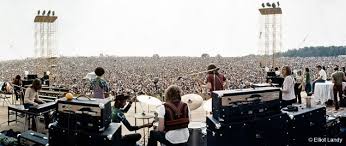
On the fortieth anniversary of the most famous music concert ever, the little town of Woodstock is back in the headlines again.

I live in Woodstock. I moved here when I was nine. I was twelve in 1969 - no way were my parents going to let me go to the concert fifty miles away. But I saw this town when it was clear why the festival organizers wanted to keep the name anyway.

Woodstock was a young town then. It had been an arts colony long before the hippies claimed it, but in 1969 the streets were crowded with long haired, friendly stoners. Music drifted into the street from the Joyous Lake on one end of town and the Cafe Espresso on the other. There was always the smell of leather from the weirdly named leather shop in the center of town. The biggest names in rock could be found jamming a the Espresso or grabbing a pizza at the Millstream Motel.

My first job, just a couple of years later, was to sit in the little rough-lumber shack that served as the Chamber of Commerce information booth at the main intersection into town in front of the Woodstock Playhouse and point down the road to the highway.

"It wasn't here," I told carload after carload of people who wanted to see Max Yasgur's farm. "It wasn't here."

But people came anyway. There was a good vibe in Woodstock and the artists will tell you there always has been. They say it's the mountains.

I left when I went to college and didn't come back to live until thirty years later.

Woodstock 2009 is a changed place, just as the world has changed since then. The music business blossomed here, then withered. The hippies grew up and either burned out or assimilated. The leather shop is gone, replaced by a chic clothing store. The Espresso is a photo gallery. The Lake is a tee shirt and head shop. The musicians who stayed kept pretty much to themselves.

Woodstock has become an old town. Its young people huddle together on the stone steps in front of the empty storefront that was once Just Alan's; the first hip, urban gift shop in town. They show up at the convenient store, their red-rimmed eyes and wobbly gaits making the six packs in their hands seem like overkill. By ten at night, the streets are usually empty.

The older residents, some of whom have been here since before the concert, remember how it used to be and wonder what happened. They miss the music. They miss the life. The laid back attitude is still here, but it's not what it was. It's a quiet country town with a few eccentrics and a weekend tourist trade.

Live music venues are trying to make a comeback in town this year. The winter will determine how many of them survive.

But there's a problem here that I don't think is unique to my town and I saw a demonstration of it tonight.

Woodstock, being Woodstock, always holds it fourth of July fireworks in August. I don't know why. But it's a great show and we go every year. This year I got some insight into at least one difference between the Woodstock I grew up in and the one I live in now.

As the sky lit up with a million lights and the booms echoed off the mountains, kids near us were yelling.

"I love PCP!" "I smoke meth!" "Meth is better than heroin!"

When the crowds flooded the sidewalk back to town, a few of the kids, clearly high, were harassing people as they passed. I won't repeat some of the things they said, but one thing that struck me was this one: "I'm just feeling really violent right now, you know? I want to hurt somebody."

And there's the difference.

I believed, back in the Woodstock of 1969, that the proliferation of drugs was an attempt to realize the connection between us all, an attempt to transcend reality to see something bigger, something even more real. I wasn't doing drugs. I was looking in from the outside. And the people who were doing drugs didn't scare me.

There were angry, troubled people, too, of course. But they were the exception among the hippies I saw every day in town. Most of them were sweet, gentle people who would look you in the eyes and try to have long, earnest conversations about things they thought were really important. They were silly sometimes, but they were kind.

Today's young drug users seem to be angry. They take drugs not to find answers, but to escape. And when they're high, they're even angrier.

I'm not blaming the kids. I'm realizing how the world has changed. We've all become angrier. That weekend of peace and love forty years ago was such a short, sweet interlude. And after that was Kent State, Watergate, so many years of disappointments, disillusionment and disgust culminating in Dick Cheney.

It takes real resilience to hold on to dreams when reality can be so ugly.

Thursday, August 13, 2009

Where to Focus - The Light Or the Dark?


Maybe it's because it's raining again. Maybe it's because my back still hurts after two weeks. Maybe it's a million worries that I try to address without going under, but I'm not in a very good frame of mind.

Our town has a farmer's market every week. It's a great little event that seems to bring everyone out from the hills to the center of town. There's live music, food, a few flea market-style booths and lots of kids and dogs. KB and I generally sit on a stone wall right near the entrance and watch the world go by. It's highly entertaining.

We generally speak to the same people every week: the neighbors, the little dynamo who is now head of the Chamber of Commerce, a loosely scattered sprinkling of musicians, some of whom you'd know and some of whom you wouldn't. This week was different.

Our town has more than its share of characters. It's an arts town and a famous one at that, so it's to be expected. Yesterday, that's who we found ourselves chatting with at the farmer's market.

There's the fiery, dramatic and passionate Dean, whose heart is as big as our mountains and whose dreams of acting fame, though sixty years old, are even bigger. I'll link to one of his performances below - I'm sure he'd be delighted if you saw it. He sat down with us and because he knows and loves everyone, we soon found ourselves talking to people we often see but never knew.

There's the old hippie couple in their bare feet and love beads. He's a fixture in town - always stands at the green flashing the peace sign to passing traffic and honking a horn a la Harpo Marx. He doesn't speak. But he does. We found that out a few months ago when he stopped to tell us we were "absolutely beautiful, man." Imagine our surprise.

This week we heard about his recent marriage to his "old lady", the winter he spent in his tent in her bedroom, the years he spent living beside the road.

"I'm a resident now," he proclaimed.

She nodded vigorously from her wildly decorated cart behind his bicycle, then they rolled off.

There's the sad-eyed, unkempt old man who lives down near the pizza place and only speaks in grunts. He used to be a lawyer. Dean knows his name, knows his story and fears he's going down the same path.

There was the sculptor, the filmmaker, the musician. They all stopped, they all were greeted by Dean with the enthusiasm generally reserved for long-lost friends.
They returned his greetings with a combination of fondness and caution, fearing getting caught in a conversation that could go far into the night.

I thoroughly enjoyed it all. I've always loved characters and I love to hear peoples' stories. When you scratch just a little, it's almost certain you'll find a fascinating story hidden under even the most ordinary-looking facade. And when you find that story, the person telling it lights up; suddenly the mask drops and you see who they really are, what they care about. That, to me, is connection. That's when I can believe in humanity.

But KB's had a harder life than I have and he's listened to a million stories from a million people. His affection for our species has been strained to breaking. Our encounters left him feeling discouraged.

He began wondering why we're so intent on focusing on people who are "making a difference", to quote Brian Williams. Why expend energy that could be used to hold a mirror to the ones who aren't? Why are we making a big deal about people who are simply behaving correctly, the way people should behave toward each other?
Why, he wondered, don't we simply nod at those people, acknowledge that they 'get it' and turn a spotlight on the ones doing it wrong - the people who put money before other people, who become corporate sharks, political monsters, idealogical dictators?

And the answer, for me, is I don't know. Perhaps I'm being a Pollyanna. It wouldn't be the first time. The sense that things are wrong is so huge, so overwhelming and so disheartening that I turn to the individuals, the stories, the people with good hearts and big stories to keep me going. And that, I know, will get a knee jerk "You're Right!" from many people. But really, am I?

I wonder if I'm just hiding under a blanket, afraid to poke my head out, turn on the flashlight and look under the bed. And if I found a monster, or maybe a lot of them, would shining a light just make it easier for them to find me?


Dean and Tennessee Williams

Sunday, August 9, 2009

Taking Woodstock


I almost believed in the Woodstock Nation again, just for a little while.

I had no plans for this weekend. But the phone rang and suddenly I was heading to the Tinker Street theatre here in Woodstock for an advance screening of "Taking Woodstock" and an exclusive interview with director Ang Lee and producer/writer James Schamus.

It was an accident - the guy who had knocked himself out arranging it was suddenly sick. A stomach bug trumps a bad back, so off I went.

An hour before the doors opened, there was a line of people waiting for the seats they'd paid $100 for. It was sponsored by the "Fiercely Independent" Woodstock Film Festival and there would be a Q and A as well as a reception afterwards.

I wasn't doing the reception. But I spoke with some of the people who were and asked them whether they went to the concert in 1969. No, the ones I spoke to didn't. They were too young. But they had a nostalgia for those times, for those ideas that they'd seen in their older brothers and sisters.

You know, of course, that Woodstock wasn't in Woodstock. But as Michael Lang said yesterday when asked why he never changed the name as the event bounced from town to town before it landed, "I didn't want to be part of the Wallkill Nation."

"What about the town of Woodstock now?" I asked the moviegoers, as some of them were locals.

"It's a parody of itself."

Not a promising mental state as the lights went down. But something happened as we watched the movie. Ang Lee, who didn't know a thing about the festival, who was a kid in Taiwan when it happened, who didn't even know it was held 40 miles from Woodstock, got it. He captured the warmth, the unbelievable sweetness of those times. He caught the innocence, the openness and the hope that was the hippie movement. It was a gathering of children and what seemed like the first deep breath of a new world. Or that's how those of us who weren't there see it. He caught the idealized Woodstock that we want to believe in.

The film's taken crap from critics because it's not about the concert. They miss the point. It is about the colliding of two cultures - the fifties Borscht Belt Catskills and the free-wheeling, wildly optimistic and unrealistic hippies who were trying to make the world into a Garden. It about the hard working, responsible young gay man who brought those worlds together.

As producer James Schamus said later, if you want to see a movie of the concert, that's been done. Go rent it.

This film pays homage to that one with the use of split screens. But that's where the similarities end. This is a story about the people, not the music. And the scene where Lee recreates the entire experience through the acid-distortions of two young peoples' eyes is one of the most beautiful things I've ever seen.

"Yes," my head said, "that's what it should have been like."

The interview with Lee and Schamus went well - they're very nice guys. And Lee has a sweetness that mirrors the people in this film. They seemed delighted that I "got it". They wanted to a make a movie showing the hearts behind the festival, showing how the concert changed their lives.

My favorite moment was afterwards. Michael Lang, in the film, is a laid back force of nature. He never wavers, he never worries, he never loses his cool. He has a vision and it's going to happen.

I stopped the real Michael Lang on the way out the door.

"Michael, was it as much fun as they made it seem like?"

He smiled. "More."

I walked down the streets of Woodstock, the town that is no longer the wild, rollicking place where I grew up and where I've come back to live. The live music, the smell of leather, the barefoot hippies, they're gone. A few burnouts remain, but it's mostly a weekend shopping spot for New Jersey visitors. The artists hide out in the hills. But I loved it again after seeing "Taking Woodstock." I loved it for what we thought it could be, and for the ideals we've never entirely abandoned, even those of us who weren't hippies, who weren't there. That was the world we believed could be. And maybe the best parts of it still could.


Taking Woodstock Trailer