Thanks to Yves and Naked Capitalism for this one.
Recession, UK Style.

THE EVERYDAY PEOPLE PROJECT Making Our Way In A New America
Showing posts with label foreclosure. Show all posts
Showing posts with label foreclosure. Show all posts
Sunday, October 25, 2009


Saturday, September 26, 2009
Ring Around the Foreclosure, We All Fall Down

If you've been checking in occasionally, you know that I've been in the middle of the loan modification process for a year. The simple version is that, bottom line, I should not have been given a mortgage...I just didn't have the income. But the banks were anxious to lend and I was confident that we had a plan that would make it work. Then the recession hit.
I haven't missed a payment. I haven't even been late. I was raised to pay my bills in full, on time, and not be part of the chain of delinquencies that cause trouble for everyone down the line. But I'm peddling hard and slipping backwards.
The local foreclosure prevention office encouraged anyone who was having trouble, who foresaw trouble down the road, to start talking to their banks before they hit a crisis point. I did.
We sent all the papers to IndyMac, only to be told that they needed more; they didn't have a program for people who weren't delinquent; they were being sold to One West; they needed us to apply all over again, they needed more. The president announced the HAMP program. I got turned down because they were transitioning to the new program. Please apply again. We did.
The latest word is that they're sorry, they're not yet participating in HAMP after all. They have no program for customers who haven't missed a payment. They'll let me know if they do decide to get on board.
This is, remember, the former IndyMac FEDERAL bank. They got rescued as they sank under the weight of their own greed and were snapped up by OneWest, which has adopted aggressive tactics to make sure customers are paying, including repeated calls demanding payment before the grace period is up.
So I've hit the wall. There is no light at the end of the long tunnel and I'm not even emotional about it. Many people have lost as much or more than I stand to lose.
But I am angry that despite compassionate words from the White House and our elected representatives, what's really happening is business as usual. Banks are seeing the recession as a terrific business opportunity and the Obama administration has backed off on demands for regulation, for common sense, for control of not only salaries, but size. There is no serious talk of reinstating the Glass-Stiegel Act. There is a stirring call from the president for business to regulate itself. That hasn't worked yet and there's no reason to believe it will in the future.
Money, big money, wins.
I have spent a morning with people who are living in low-income housing, trying to find work, lining up at the food pantries for the week's groceries. I'm lucky and I know it.
But the greed of this society, the unbridled lust for more, is destroying our foundation. The middle class is being taxed into extinction yet the burden for caring for the destitute, paying for services and trying to help the poorest among us get jobs, get an education and get on the road to self sufficiency falls on those of us who aren't much better off than they are. Taxes, insurance, the cost of living - they're skyrocketing while salaries are flat and jobs are disappearing.
We're in trouble but the people making the decisions are the ones who are benefiting from this situation.
I'm one of millions. And let me say it loud and clear: This System Is Wrong. Shame on us. It exists because we allow it to exist.
Thursday, March 5, 2009
Foreclosure Help and Hurdles
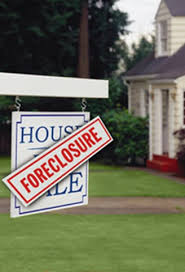
I did a story on local reaction to the federal foreclosure prevention program announced this week. It was an eye-opener.
First, I got a call from the foreclosure counseling service I've been working with. Yup, I'm on the edge of the precipice along with a lot of other people. And I'd been told there was nothing for me because I haven't missed a payment yet.
But today I was told that the new program has provisions for people who haven't stopped paying their mortgage, whose income to loan ratio is way out of whack thanks to the economy. That's heartening. We didn't buy a house to lose it, but the recession knocked our income on its butt and we've been squeaking for months.
But then I spoke with Republican NY Assemblyman Joel Miller and heard the opposing philosophy in a nutshell.
"We don't have the money to bail out people who are in homes they can't afford," he argued. "People who are still paying their bills will end up paying the tab and that's unfair."
It's the laissez faire argument. Let the chips fall. But as with most things, there are a number of problems tangled into this that one side or the other tends to ignore.
Yes, people who are managing to tread water shouldn't be pulled under by the drowning. Yes, speculators or greedy people who were buying and selling as a business probably should lose out. They gambled and they lost.
But empty houses pay no taxes. And that gap means raising taxes for the people who are left. And empty houses devalue the neighboring homes....continuing the negative spiral that's already leaving us gasping for breath.
The mayor of a local city sounded really angry about the taxes his citizens have to pay. "It's time for the way taxation is done in this state to be reformed. New York is taxing people out of the state!"
And there's another knot in the tangle. Government is a mess. The way spending is handled has been so distorted, so convoluted, that you need a map to figure out how it's done. I doubt it's just New York. There is nothing simple about any of it.
It's so complex we have to pay people or buy software to figure out how much tax we have to pay. And once government has it, it begins its journey into the slithery depths of the bureaucracy.
So how do you argue against preventing foreclosures unless you're prepared to rip open the doors and windows, shine a light on that deep money hole, put on your visor and start counting and accounting for every single penny? And then start making the path from income to spending a more direct line?
It's revolutionary. It goes against every unwritten rule in every legislature in the land. And it may be the only thing that will prevent this from ever happening again.
Tuesday, March 3, 2009
How Far is Down?

The Dow, which Suze Ormond predicted could go as low as 8000 before bouncing back, is headed for new predicted lows of 6000. HSBC, Beneficial Household and Finance, is shutting down all eight hundred of its loan offices nationwide. 6100 jobs are gone.
The National Association of Realtors reports pending home sales are at a record low.
Gerald Celente, one of the gloomiest economic prophets out there, now announces in his Trends Report that "the greatest Depression has begun".
Unemployment is up, people are reportedly reluctant to accept job offers, preferring the bird in the hand. Mortgage lenders say the bubble of subprime mortgage foreclosures has moved on - now they're dealing with people who've lost their jobs.
It's pretty dim. So here's a question for you:
What, in your opinion, are the bright spots? What policies do you think show promise? Or more personally, how are you handling this onslaught of bad news...and when do you think things will begin to improve?
Thursday, February 19, 2009
Pet Recession

Check your local shelter - they've probably filled every available space with pets whose owners can't afford to feed them anymore. One local shelter I know has a 'no kill' policy - and that's resulting in people being turned away as they try to surrender their beloved dog or cat (or bird, ferret or bunny) because there is just no room at the inn.
We've toyed with the idea of adding a dog to our menagerie of three argumentative cats. But the reality is we can't afford it right now. The cost of dog food is high; the vet bills can be astronomical. If you've already got the animals, how do you take care of them when you've lost your job, maybe are losing your home?
Here's a story out of Chicago with one answer. Dog trainer Cathy Sabin has opened up a food pantry for pets. There are others, and the need for what they're giving is growing. Sabin says she's seeing a lot of senior citizens lining up for free bags of pet food.
Some cranky so-called pragmatist out there may argue, "If they can't afford them, then why are they keeping those animals?"
The answer, you heartless automaton, is that for many people a pet is a best friend. Particularly for people who are isolated, people who are sick or sad, people who are older, a pet can be a comfort, a warm connection with another living creature. And don't tell me pets don't care about their owners. Anyone who has ever had a connection with a beloved animal knows that there is a bond there that can't be broken by time or distance. Some people like to pretend that animals are somehow less than humans, less sensistive, less aware. I maintain their awareness is different - I believe they may not relate to the world the same way we do, but different is not inferior...it's just different. They know their people, they remember good and bad experiences, they have loyalty and they will risk their own safety to protect the ones they care for. Hmmm...maybe they're better than some of us.
Anyway, food pantries for pets. It's sad that it's coming to this, but what a fine example of the best in humanity that someone's doing it.
http://www.chicagotribune.com/news/local/chicago/chi-pet-pantry-nzone-20feb20,0,5222459.story
Wednesday, February 18, 2009
Stalling the Eviction
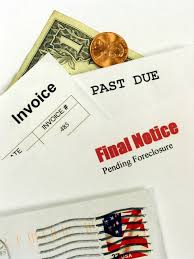
Those of us scrambling to make those mortgage payments every month are waiting to see just what the new foreclosure prevention plan means to us. In the meantime, here's a neat trick to slow down those deputies with the eviction notice:
http://www.cnbc.com/id/29241628
Demand the original paperwork. Really. This whole fiasco is such a mess that if a homeowner demands to see the original mortgage, it often shuts down the entire foreclosure process indefinitely. Chances are the bank that's trying to toss you out isn't the one that originally loaned you the money.
Our mortgage has changed hands so many times we can't even keep track. It took a conversation with our mortgage servicer (that's the company we pay every month) to discover that it doesn't own our mortgage - and any discussion of renegotiating terms with them is impossible until we've missed more than two payments. We're dealing with Fannie Mae - who knew?
If you own a home, do you know who actually holds your mortgage?
Saturday, February 14, 2009
Just Another Foreclosure
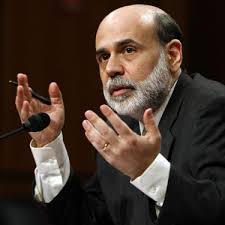
It brings a tear to the eye - the economy has finally touched Fed Chairman Ben Bernanke. The Wall Street Journal reports his childhood home in Dillon, SC, was sold for 83 thousand dollars to a local bank officer. The buyer was suitably respectful of the historic nature of his purchase.
"It's just a great sense of pride to know that one of the greatest leaders we have in our time period walked the same floors I walk," said Travis Jackson, who said he may put up a plaque honoring Bernanke.
The house was sold by the Bernanke family ten years ago. It was then sold again to a national guardsman and his family for $123,000. They lost it when they couldn't keep up the payments.
I won't even comment on the irony.
I've been doing a lot of investigation into the foreclosure issue. Evan Wagner, director of communications for IndyMac Bank, tells me in most cases his bank's hands are tied. It doesn't own a good 80% of the loans it services. And the agreements it has with the banks who do own those loans specify that it can't negotiate with borrowers until they've missed at least two and sometimes three payments.
So people who know the wolf is at the door and try to talk to a bank before it's too late don't have any options if their loan is with one of the giant lenders. Local really is proving to be better.
There's word that the Obama administration has some plans to alleviate the foreclosure crisis. It's certainly not part of the big stimulus. And without it, it seems to be a foregone conclusion that we're just throwing good money after bad.
Thursday, January 22, 2009
Hard Times Are So Much More Civilized in the UK

We still have so much to learn from the Brits. They've got the stiff upper lip, the afternoon tea, and they've got legal squatting.
According to the BBC, a bunch of art students have moved into a couple of vacant mansions at a fine address in London - Park Lane. They're holding open houses, exhibiting art and generally proving to be pretty good neighbors. Their "landlord" (are you a landlord if you don't get rent, or just a victim?) may be the Duke of Westminster, who apparently hasn't used the homes in years. They're valued at 15 million pounds. Each.
The new tenants are art students, 30 to 40 of them per building. Squatting is not illegal if you don't force your way in and you cause no criminal damage. The students say they're not crackheads, they're not wrecking the places, they're just enjoying the finest free student housing ever.
http://news.bbc.co.uk/1/hi/england/london/7845746.stm
So let's consider this notion. We've got an awful lot of empty homes owned by banks that can't sell them. We have an awful lot of people who are having trouble paying their bills. The lines at soup kitchens are getting longer. Utility companies report a rising number of delinquencies...and bigger ones.
What if we started letting people live in those empty houses across the US legally? What if the banks signed a deal that required they keep the places up, didn't allow the pipes to freeze, basically acted as caretakers?
Am I missing something or could this make sense?
Monday, October 20, 2008
What Goes Around Comes Around - Or, Welcome to the New Depression
I'm immersed in economy stories right now. Local communities are trying to draw up proposed budgets and no matter how careful they've been in the past, they're going to be hurting. And if they haven't been careful, it's a bloodbath.
One city did a long-overdue revaluation this past year. The timing is proving to be awful, as many property owners face as much as a 14 percent hike in their taxes because of it.
It's worse in another city - they discovered that they've been overcharging commercial landowners for more than a decade. If those taxpayers sue, the city will go bankrupt. And whether they sue or not, the residential property taxes have to go up to where they should have been all along. Initially, that meant a 25 percent tax increase. The mayor knew that was unconscionable, so he slashed the budget to the bone and got it down to 8.5.
Then there's the housing crunch. Values are dropping, salaries aren't rising and people who bought homes they could barely (or just plain couldn't) afford once the economy crashed and some sources of income dried up are hanging on by their fingernails. Foreclosure counseling programs will tell you to start talking to your bank about restructuring your loan before you miss a payment. But good luck. Banks, even banks that are comfortably nestled in the loving arms of the feds, won't talk to you if you haven't missed a payment.
Catch 22.
HSO and I went to the UN last week to attend a black tie event honoring philanthropists. And even the Beautiful People are worried.
"What," a doctor who's travelled the globe to do good, "happens to giving when the money dries up?"
What indeed. It's called a depression for a very good reason, not the least of which is its emotional impact on everyone involved.
One city did a long-overdue revaluation this past year. The timing is proving to be awful, as many property owners face as much as a 14 percent hike in their taxes because of it.
It's worse in another city - they discovered that they've been overcharging commercial landowners for more than a decade. If those taxpayers sue, the city will go bankrupt. And whether they sue or not, the residential property taxes have to go up to where they should have been all along. Initially, that meant a 25 percent tax increase. The mayor knew that was unconscionable, so he slashed the budget to the bone and got it down to 8.5.
Then there's the housing crunch. Values are dropping, salaries aren't rising and people who bought homes they could barely (or just plain couldn't) afford once the economy crashed and some sources of income dried up are hanging on by their fingernails. Foreclosure counseling programs will tell you to start talking to your bank about restructuring your loan before you miss a payment. But good luck. Banks, even banks that are comfortably nestled in the loving arms of the feds, won't talk to you if you haven't missed a payment.
Catch 22.
HSO and I went to the UN last week to attend a black tie event honoring philanthropists. And even the Beautiful People are worried.
"What," a doctor who's travelled the globe to do good, "happens to giving when the money dries up?"
What indeed. It's called a depression for a very good reason, not the least of which is its emotional impact on everyone involved.
Subscribe to:
Posts (Atom)