Showing posts with label recession. Show all posts

Thursday, August 29, 2013

We're Still Here - But We Don't Feel Well

I started this blog back in 2008. I was frightened by what I saw happening in my country.  The American Dream, that belief that hard work, intelligence and ambition could take you anywhere you desired, died.  It was a slow, sad, painful death and some of us still can't believe it's gone.

It is.

I have gone through all the stages of grief and have finally accepted that the world I grew up in no longer exists. The brave new world is not better. And we need to speak up about it.

I want to do something. I am not a policy maker (nor do I want to be), I am not a radical (except in my imagination), but I know something has gone terribly wrong and we all need to stop denying it.

There is not one simple fix for an incredibly complex web of issues. But fixes have to begin somewhere. So I'm focusing on work.We are working harder and longer than ever before, yet the middle class is heading for extinction. When it's gone, so is the society we say we live in.

I write.  I believe that this little corner of the blog universe is my place to shine a spotlight on individual stories, true stories that will illustrate what life is like in what we're told is post-recession America.

I have begun interviewing people from all walks of life, asking them about what it's like to try to stay afloat in the treacherous seas that are America after the economic meltdown.

 Some of them are working multiple jobs. Some are trying to find one. Some of them are at the top of their professions. Some thought they'd be retired by now.

They're young, they're old, they're saddled with college debt or never finished high school. They are us. And their stories are the real stories of what it's like in this country today.

There are other projects out there with similar (or even the same) names. It doesn't matter to me. What I'm doing is not the same as what they're doing, and we're all contributing to what I believe is a vital conversation.  I hope you'll look at all of them.  They matter. These people matter. We matter. All of us.

Like most of us, I work several jobs. Time is my challenge. But my intention is to post one story a week here, and I hope you'll read, comment and share. Welcome to Everyday People. Join in - share your story.


Sunday, September 25, 2011

I Should Do Something --- but What?

I find myself, for the first time, thinking about protesting.  With each day's headlines, I wonder if I should make some sort of grand gesture, even if it's futile.The evidence that we're heading down a bad road continues to pile up and I am seeing no signs of an imminent change of course.


1.  During Republican debates, the audience cheers at the prospect of letting people die.  And executing people.

2.  The US supports the Arab Spring everywhere but in Palestine.


3.  General Electric paid no taxes in  2010.  In fact, we paid THEM to keep making profits.


4.  During the recession, the largest banks have made a massive profit; but Moody's is now downgrading them because of the possibility that if their speculative investments begin to crash, it's possible the US government won't bail them out.  And that could create the very bank crisis scenario the pundits are dreading.


5.  The London riots got front page, first block coverage for days on every news station.  Protesters occupying Wall Street are being ignored by most press outlets.  But not by the NYPD.

6.  Our president will not sacrifice his ambition to the greater good. He made it clear from day one he wanted two terms.  Now, when nothing has made much of an impact on the recession, he will continue to play it safe to ensure his campaign coffers are full for his re-election campaign.


7.   There is no press but the Internet.  Rick Perry didn't win the Florida primary.  Neither did Mitt Romney.  Or anyone else I'd ever heard of.  But I still can tell you nothing about the man who won because the nightly news (NBC, in this instance) simply mentioned what a stunning upset it was, then did another story on the two candidates they already had stories on:  Mitt and Rick.
  Nice, Lester Holt.  Are you executive producer when you're at that fancy desk?
8.  College students can't find jobs.  So they're racking up more students loans to stay in school, hoping things will improve in a year or two.
9.  8.8 million people worked part time in August because it's the only work they could find.  16.1 percent of American workers are underemployed.  31% of the workforce was underemployed at some point in 2009.
10.  Desperation for cash is a major part of the conversation as states consider hydraulic fracturing, the effects of which were illustrated so pointedly in "Gasland".
There is fast money to be made.  The long term environmental impacts may be far more expensive to deal with.  How much does it cost to import enough drinking water for an entire state?  Several states?

That's just ten items off the top of my head.  The actual list is far longer.  I haven't even mentioned our multiple wars, the fortunes being made by hired mercenaries, our unhealthy mass produced food, our continued discrimination against people who don't look like us.

It's feeling like last days of the Roman Empire to me.  And the thought that keeps crossing my mind is that I should just start walking.  Walk from New York to California and back to Washington.  Criss cross the country, bring a recorder and document what I find along the way.  I know I'm a speck in the ocean, but if I did it long enough, maybe it might get some notice.  Maybe it'll force a conversation.  Or maybe I'm mixing up political activism with Forrest Gump.


Maybe a hunger strike?  I suspect I would starve to death before any real change occurred.

And so I feel helpless.  For now.  But if there were enough people like me, who are tired of emotional toddlers running the world, maybe there is something we could accomplish together.

Wednesday, August 10, 2011

The UK Is Burning

I have been listening to the news from the UK and it is both terrifying and heartbreaking.  It is also ominous.

Terrifying because the thought of gangs of angry, destructive people roaming the cities in packs, destroying everything in their path, is one that makes me feel particularly powerless.  How do you reason with a pack?

Heartbreaking because the "authorities" whose authority is being rejected are reacting like disapproving parents.  I actually heard one government spokesman say, "If they'll go home and behave we'll talk to them."  Behave?  Up until now, they have.  And no one talks to them.  That's not how the game is played.  Power talks to dissent when it can no longer ignore it.

Heartbreaking because there has to be a reason this is happening.  People don't just suddenly explode into violence.  They burn, slowly and steadily, for a long time.  They simmer.  If the heat isn't turned down, they boil.  And at some point, they boil over or blow up.

I don't condone violence.  I don't argue that there's anything justified about the destruction, the looting, the theft.  But I know there has got to be a REASON.  I found a Londoner's blog today that offers a damned good guess at what's happening.  Everyday people have nothing to lose and that is dangerous.


Meet Penny Red.  And pay attention.  Don't think this is a strictly UK phenomenon, you great embarrassments in Washington.

Panic in the Streets


Saturday, March 7, 2009

Now That's a Good Story!


Did you hear about the foiled bank robbery near DC yesterday?

According to the Washington Post, it started as your ordinary bank robbery. A 43 year old man walked into the Bank of America branch near the Bethesda Metro stop shortly before closing, demanded money from a teller and left. But then it got interesting.

Two tellers and a customer chased the guy down. He blasted them with pepper spray and they kept coming. Two blocks away, they tackled him and pinned him to the ground until the police showed up.

Lawrence Gilmartin was charged with that robbery, as well as another last month.

Police called the incident "very unusual." They cautioned citizens not to put themselves in danger in an effort to stop crime.

I think it's great. I especially like to visualize these people, just so damned angry that somebody's stealing money while they're probably struggling, that they don't even care about pepper spray. I wonder if they even knew their eyes were streaming and they were in pain until they caught the guy.

Power to the people. Who says we're helpless?

Sunday, February 22, 2009

Making Lemonade


I recently met Dan Jacobs, the young entrepreneur who started Everywun. Everywun operates on the conviction that doing good is good business. Everywun enlists businesses willing to donate a certain amount of money to a worthy cause, then ties them with a web 'badge' that anyone can put on a website or blog. For every hit on that page, the business makes a donation. And what the business gets out of it is consumer recognition, goodwill and more business. Jacobs says he has studies that prove a customer is more likely to buy from a company it sees as socially responsible. He's a social entrepreneur. He's part of a growing group.

Ode Magazine, my favorite magazine on the planet at the moment, recently did a long feature on social entrepreneurs. They're not starry eyed idealists, though they're certainly idealists.

They're taking advantage of the increasing sense that we're all in this together - as each of us feels the pinch from the economy in lesser or greater degrees, we also are aware that everyone else is feeling it, too. We can curl up in a corner and cry, we can pull the covers over our heads and wait for it to be over, or we can help. That last one seems to feel the best, doesn't it?

http://www.odemagazine.com/doc/61/social-entrepreneurs-mainstream/

Thursday, February 19, 2009

Pet Recession


Check your local shelter - they've probably filled every available space with pets whose owners can't afford to feed them anymore. One local shelter I know has a 'no kill' policy - and that's resulting in people being turned away as they try to surrender their beloved dog or cat (or bird, ferret or bunny) because there is just no room at the inn.

We've toyed with the idea of adding a dog to our menagerie of three argumentative cats. But the reality is we can't afford it right now. The cost of dog food is high; the vet bills can be astronomical. If you've already got the animals, how do you take care of them when you've lost your job, maybe are losing your home?

Here's a story out of Chicago with one answer. Dog trainer Cathy Sabin has opened up a food pantry for pets. There are others, and the need for what they're giving is growing. Sabin says she's seeing a lot of senior citizens lining up for free bags of pet food.

Some cranky so-called pragmatist out there may argue, "If they can't afford them, then why are they keeping those animals?"

The answer, you heartless automaton, is that for many people a pet is a best friend. Particularly for people who are isolated, people who are sick or sad, people who are older, a pet can be a comfort, a warm connection with another living creature. And don't tell me pets don't care about their owners. Anyone who has ever had a connection with a beloved animal knows that there is a bond there that can't be broken by time or distance. Some people like to pretend that animals are somehow less than humans, less sensistive, less aware. I maintain their awareness is different - I believe they may not relate to the world the same way we do, but different is not inferior...it's just different. They know their people, they remember good and bad experiences, they have loyalty and they will risk their own safety to protect the ones they care for. Hmmm...maybe they're better than some of us.

Anyway, food pantries for pets. It's sad that it's coming to this, but what a fine example of the best in humanity that someone's doing it.


http://www.chicagotribune.com/news/local/chicago/chi-pet-pantry-nzone-20feb20,0,5222459.story

Saturday, February 14, 2009

Just Another Foreclosure


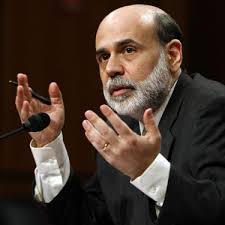
It brings a tear to the eye - the economy has finally touched Fed Chairman Ben Bernanke. The Wall Street Journal reports his childhood home in Dillon, SC, was sold for 83 thousand dollars to a local bank officer. The buyer was suitably respectful of the historic nature of his purchase.

"It's just a great sense of pride to know that one of the greatest leaders we have in our time period walked the same floors I walk," said Travis Jackson, who said he may put up a plaque honoring Bernanke.

The house was sold by the Bernanke family ten years ago. It was then sold again to a national guardsman and his family for $123,000. They lost it when they couldn't keep up the payments.

I won't even comment on the irony.

I've been doing a lot of investigation into the foreclosure issue. Evan Wagner, director of communications for IndyMac Bank, tells me in most cases his bank's hands are tied. It doesn't own a good 80% of the loans it services. And the agreements it has with the banks who do own those loans specify that it can't negotiate with borrowers until they've missed at least two and sometimes three payments.

So people who know the wolf is at the door and try to talk to a bank before it's too late don't have any options if their loan is with one of the giant lenders. Local really is proving to be better.

There's word that the Obama administration has some plans to alleviate the foreclosure crisis. It's certainly not part of the big stimulus. And without it, it seems to be a foregone conclusion that we're just throwing good money after bad.

Thursday, February 12, 2009

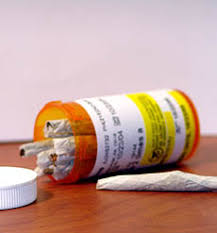
The Economics of Marijuana


A recession can do funny things to people. It can make some staunch red states rethink their stance on marijuana.

Okay, let me preface this with a disclaimer: I am not a pothead. I'm not a liberal, raving "right to get high" activist. I'm a pragmatist.

And so, apparently, are Tennessee, Alabama and Texas, among other states. They're looking at the looming catastrophes that are their budget deficits, comparing those with what they HAVE to spend by state and federal mandate, and looking for places to cut. And that's where marijuana comes in.

Law enforcement across the nation spends up to seven billion dollars a year enforcing laws against marijuana, according to a study done by Doctor John Getman.
And states are now considering whether they can afford to keep enforcing that prohibition, according to NORML, the marijuana law reform lobbying group. They're getting phone calls from states they never expected to hear from, legislators looking for the hard facts about marijuana, medical marijuana, scientific data...information they are using as they decide whether it's time to decriminalize marijuana.

There's a precedent for this. FDR partially repealed prohibition during the Great Depression. It made sense. It was an industry that was in demand, it was an industry that could be taxed. And regulating that industry eliminated the criminal distribution of booze.

This seems to make sense with marijuana, too. Studies don't agree on the "gateway drug" argument - in fact, the biggest study on the topic concluded there was absolutely no evidence that marijuana use led to harder drug use. There is apparently no evidence that anything in the chemical makeup of marijuana leads to cocaine, crack, heroin, meth or any of the other drug scourges of our time. The actual gateway drugs were cigarettes and alcohol.

And there is a great deal of evidence that medical marijuana is a gift for cancer patients. It relieves nausea, restores appetite and does it instantly, with no need for a queasy patient to swallow anything. And it's far cheaper than a legal marijuana alternative pill that often isn't covered by insurance.

Millions of people use pot. Millions of them. Nobody's monitoring it except the police. Tons of illegal marijuana is brought into this country from elsewhere, and there is no quality control.

There is money to be made. Think of the money if pot was taxed at the same exorbitant rate as cigarettes. California has medical marijuana and though it accepts tax payments from those clinics, it doesn't officially tax it. And safety standards, legal regulations could be put in place.

Want to do some investigating? Here are two studies:

Http://prohibitioncosts.org
http://drugscience.org

And here are the facts presented with no bias for either side.

http://procon.org

Monday, February 9, 2009

Watching the Jobs Go

This may just be too depressing - but look anyway. If you hide your head in the sand, you can't help, can you? There's a place you can go to see what jobs have been lost.

http://layofftracker.blogspot.com/

Why do you need to know this, you ask? Is it necessary to bury ourselves in this misery up to our necks just to feel connected? Well, maybe. But there's another reason.

Most of the problems this country has had stemmed from blind trust. We believed what we were told. Some of us were naive, some just gullible, others too lazy to check the facts. Or some combination of the above. Those days are over if we want things to get better. It's time to take responsibility, check the facts, know what's really going on and then make sure the people we elect to take action hear whatever opinion we have. Those opinions have extra gravitas because they're informed opinions, not knee-jerk "I heard it from him/her so it MUST be true!"

I know a guy who says his father used to yell at him for spouting out other people's opinions as fact. "Papagallo!" his dad hollered. (That's Italian for parrot.) "Make up your own mind!"

Good advice, America. Good advice, planet. Blindly following whoever sounds good or makes us feel better has gotten us into nothing but trouble. Any institution that insists on blind faith has some explaining to do. We are thinking creatures. We reason - or we should. Think, study and form your own conclusions.

So back to the litany of misery - we need to know what jobs are being lost and where. We need to be informed about how bad things are. We need to know if it's urgent. Because if we sit back and wait for politicians to make it all better with no pressure from us, we're going right over a cliff. And we will be the ones to blame.

Sunday, February 1, 2009

Economy Hits Sports, Too


Thanks to Handsome Significant Other for this one:

It didn't take long for the recession to spread its effects into one of the most overpaid segments of the economy - sports.

The release of Joe Torre's tell all Yankees book came along with revelations that Yankees pitcher Andy Pettite ran into the "New Economy" head on. The team offered the veteran 10 million dollars to re-sign. Nope, said Pettite. He was looking for 15 million. And after shopping around, discovering nobody, just nobody, was going to pay him that amount of money, he came back to the Yankees and said okay. He'd accept 10 million. The Yankees said no go. The offer was now 5 million. And he took it.

It's not so much a reflection of Pettite's skills, though he is certainly not a young buck anymore. It's the economy. Even the legendarily generous NY team is tightening up the spending for most players.

There are 30 free agents in major league baseball, all looking for new teams. Being a free agent used to be the holy grail - once you reached that status, you were pretty well assured of a mind-bogglingly large salary after a heated bidding war among MLB teams. Not this year.

Manny Ramirez, for instance, never expected to still be without a home this late in the winter. And he's got an agent who's considered a master of the negotiating game. But so far, only the Dodgers are playing - everyone else would love to have him, but the salary he would command is a luxury now.

The economy is bound to hit the teams where it hurts - in the wallet - and they know it. The rising costs of ticket prices have put a day at the ballpark well beyond the comfort level of most fans. Boston, the most expensive ticket in baseball, had an average fan cost index in 2008 of $321. That's the estimated cost of a day at the park for a family of four, according to the Team Marketing Report.

Sixteen of the thirty teams are freezing or cutting ticket prices in 2009. They are anticipating trouble.

The Super Bowl isn't immune - secondary ticket prices are down almost 40%.

So what's next? Movies? Films, during the Depression, were one of the few things that saw a steady business. We loves us our escapism when times are tough. But movies aren't cheap to make, actors are remarkably overpaid, and the prices at the ticket counter have risen steadily. And they're not the only game in town now. We've got DVDs, we've got BluRay, we've got television and we've got Hulu.com.

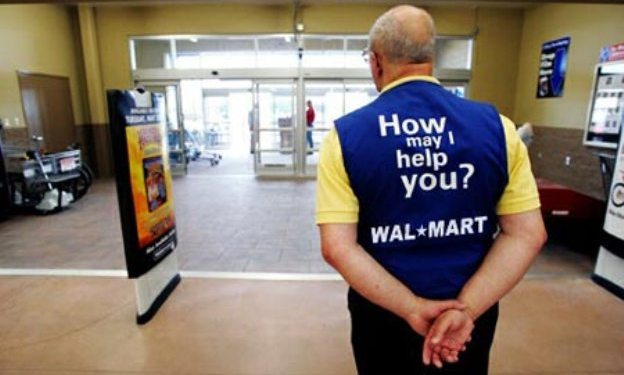
Marketers in every sector are responding to the new national mood - Allstate encourages us to insure what we've got with a company we can trust - Walmart is positioning itself as the place to save money and downsize. It's a new world. And indications are it's going to be around for awhile.

Maybe stickball is going to make a comeback.


http://mlb.mlb.com/news/article.jsp?ymd=20090128&content_id=3780812&vkey=perspectives&fext=.jsp&c_id=mlb

Thursday, January 29, 2009

Computers Are Crashing, Too


Just in case you didn't have enough to worry about, there's a digital pandemic that no one has yet figured out how to shut down. Is your computer already infected? Maybe.

Experts say it's a new Internet plague that seems to be the first step of a multistage attack...and computer security experts from the civilian and military worlds don't know who programmed it, or what the next stage will be. A malicious software program known as Conficker or Downadup is being spread thanks to a recently discovered MS Windows weakness. Thanks a lot, Microsoft. It also spreads through hand carried gadgets like USB keys.

Nine million personal computers are already believed to be infected.


Here's the scary part - these worms can then create a unified system of infected computers called botnets, which will then accept instructions from whoever authored the worm in the first place. An army of obedient digital slaves...and one of them could be your own PC.

An executive with Support Intelligence says if this is a digital Pearl Harbor, we're at the point where the Japanese ships are visible on the horizon.

Microsoft did an emergency patch in October, but it's still spreading. What can you do? If you've got a PC, update. And keep your fingers crossed.

Scary enough when it's your personal computer. How about when it's in your office? One infected computer will infect every computer on the network. And it's possible that what the botnets will steal the PC user's personal information.

Or maybe it'll just send out a lot of annoying spam.


Oh...on a totally different topic, if you've been thinking about visiting New Zealand, now's the time. The NZ dollar dropped to its lowest level in ten years against the US dollar after the Reserve Bank of New Zealand hacked benchmark interest rates from 5 to 3.5 percent. Until now, RNBZ rates had been the highest of all industrialized nations.

Paris Becomes Walmart


Not sure if this is a recession related phenomenon, but it sure is a shift.

When you dream of running away and becoming an artist, that vision must include a cigarette, a beret and a friendly community of starving artists on the streets of Montmartre. Ah, Paris. The grungy center of the civilized universe, where I sat at a little cafe table sipping cafe au lait and watched the Parisian rats running along the cobblestones and under the sidewalk. It's beautiful with the kind of beauty that's real - even more beautiful because it's so imperfect. Part of its charm is its reputation as a haven for creativity.

But now souvenir shops set up near Montmartre are slicing into sales of art by Parisian artists. There are three hundred officially registered artists there - and they're competing with mass produced Chinese pictures that sell for a fraction of what they have to charge to make any money at all.

A BBC reporter asked the souvenir shops where the paintings came from, and it took a bit of persuading to get them to admit that yes, the paintings were from China. And some of them even touch them up themselves!

It's a tough economy. But buying rip off, assembly line art is a bad call on every level. Do you want your money to support a factory or an artist? Would you choose a bigger, bad piece of art over an exquisite small one simply because you have a lot of wall to cover? Do you want bad art in your life?

Thanks to Art News Blog for this one.

Tuesday, January 27, 2009

Rioting to Work In Japan


Don't believe this is a global recession? The riots in Iceland aren't enough evidence? How about Japan, where hotel workers tried desperately to keep their employer open even after the place was shut down?

After Lehman Brothers went belly up, the Keihin Hotel was shut down in Tokyo and all 130 employees were told they were fired. The firm that owned the hotel owed 6 billion yen to a Japanese subsidiary of Lehman's. The workers resumed the hotel's operations the day after they were fired...and have been running it since October 21st.

A court order supported the owner's decision to sell and ordered police to seize the building. Want to see what desperation looks like? JapanProbe posted the video.

Japan Probe Blog

Saturday, January 24, 2009

Another Story From the Second Depression


Meet Charles James Isler. He doesn't have a steady job. He hasn't in twenty years. He stands by the side of the road with a sign reading "I Need Work". You'd think he's one of those desperate souls who has hit hard times and is hoping for an odd job to keep him going. Or maybe he's got a hard luck story, an addiction - maybe he's homeless. Why else would he spend two or three hours standing in the winter cold, bundled against the biting wind as his nose runs, hoping someone will stop and give him something to do for day or two?

According to Mr. Isler, his back to basics career hunt has kept him working on and off for twenty years. "You go to those employment centers and they give you the run around," he told me. "I've always gotten work this way."

That's more important than ever now, as he recently got married. He proudly showed me a photo of his wife when she was a model. Those days are gone, the money's gone, and Charles Isler has responsibilities now.

"She has a sleeping problem," he said. "I have to buy her sleeping medication and she has a high tolerance - I have to buy a lot of it." His wife's name is Lucy. He made a point of telling me.

And so Charles James Isler puts on his coat, his scarf, his gloves and his hat, picks up his sign and stands by the side of a busy street in a small New York town. "I Need Work" his sign proclaims.

I wondered if he worried that as the economy worsens, the work will dry up for him.

"Nah, nah. People need help, they need something done in a hurry and they see me standing out here and take me off."

"And do you do this seven days a week?"

He smiled. "Sometimes. Sometimes. And sometimes I get lucky."

Friday, January 23, 2009

Suing the SEC


Here's a story that may just be the first of many -

Phyllis Molchatsky lost two million dollars she invested with Bernie Madoff. She plans to sue the SEC to get it back.

Molchatsky, who lives in the suburbs of New York City, says she invested everything she had in Madoff's fund through her broker because it seemed steady and safe. It didn't show wild swings either up or down...and her investment seemed a good one. Between 2001 and last year, it nearly doubled. Then she lost everything.

She says the money was supposed to cover her retirement, her adopted son's education, and her own medical bills if her recently diagnosed Parkinson's disease grew worse.

The suit is believed to be the first filed by an investor against the Securities and Exchanges Commission. The argument is that the SEC didn't do its job, didn't oversee what Madoff was doing, even ignored warnings that something was very, very wrong.

Molchatsky's attorney has filed an administrative claim for 1.7 million dollars. The SEC hasn't commented. If they refuse, a lawsuit will be next.

Experts expect the SEC to claim sovereign immunity. That's a holdover from a monarchy that basically claims The sovereign can do no wrong.

That's clearly an outdated notion.


http://www.nationalpost.com/related/topics/story.html?id=1109949

Thursday, January 22, 2009

Hard Times Are So Much More Civilized in the UK


We still have so much to learn from the Brits. They've got the stiff upper lip, the afternoon tea, and they've got legal squatting.

According to the BBC, a bunch of art students have moved into a couple of vacant mansions at a fine address in London - Park Lane. They're holding open houses, exhibiting art and generally proving to be pretty good neighbors. Their "landlord" (are you a landlord if you don't get rent, or just a victim?) may be the Duke of Westminster, who apparently hasn't used the homes in years. They're valued at 15 million pounds. Each.

The new tenants are art students, 30 to 40 of them per building. Squatting is not illegal if you don't force your way in and you cause no criminal damage. The students say they're not crackheads, they're not wrecking the places, they're just enjoying the finest free student housing ever.


http://news.bbc.co.uk/1/hi/england/london/7845746.stm

So let's consider this notion. We've got an awful lot of empty homes owned by banks that can't sell them. We have an awful lot of people who are having trouble paying their bills. The lines at soup kitchens are getting longer. Utility companies report a rising number of delinquencies...and bigger ones.

What if we started letting people live in those empty houses across the US legally? What if the banks signed a deal that required they keep the places up, didn't allow the pipes to freeze, basically acted as caretakers?

Am I missing something or could this make sense?

Thursday, January 15, 2009

They're Not Jumping Out of Windows, But They're Trying to Die

The stories I'd read on the failed attempts of a midwestern financial manager to fake his own death weren't terribly detailed. On the surface, they were downright funny. But there's more to the story and I'm not laughing now.

Marcus Schrenker apparently did try to fake his own death, did call in a false mayday from his single engine plane; did parachute out. But his journey nearly ended in a small tent as he tried to make his death a reality.

http://www.nypost.com/seven/01152009/news/nationalnews/butchered_lam_150254.htm


There will be more of these pitiful stories - I know of two confirmed recession-motivated suicides in downstate New York so far. These are people who had it all - and now they're losing it.

Part of me sneers - they can't handle living like the rest of us? But the better part of me hurts for them - it's not just money. It's their reputation, their self-esteem, the lives they knew that they feel they're losing through their own mistakes. Money is more than currency - it's who they once were.

President Obama wants to jump start a dead economy. There may be more riding on him than we realized.

Tuesday, January 13, 2009

*UPDATE* Let the Games Begin - Second Depression II-

Our roving boy has been found - here's the background, or skip to the end if you know it already:


As the ripples from Bernie Madoff's scam become a tsunami washing over global investors and carrying away their money, as the body of a European financier is removed from his Manhattan office, here's a little slice of reality from the BBC. They're watching.

38 year old Marcus Schrenker is missing after his plane crashed. It appears he did it to fake his own death.

Schrenker's financial management companies are in trouble. They're under investigation and are said to owe half a million dollars to an insurance company.

He took off in a single engine plane from a small Indiana airport this past weekend, bound for Florida. He was alone. Somewhere over Alabama, he made a distress call. His windshield, he said, had imploded and he was bleeding.

The rescue effort began - apparently a little more quickly than Mr. Schrenker anticipated. Military planes intercepted his little Piper and found it on autopilot, with the door hanging open. No pilot.

It soon crashed into an Alabama swamp, near a neighborhood. Police say there was no blood, no pilot, and no smashed windshield.

But our hero isn't totally missing - a man matching his description checked into an Alabama motel and explained his appearance as the result of a canoeing accident. He later was seen running off into the woods.


Do they have alligators in Alabama?


Apparently if they do, he dodged them, too.

http://news.bbc.co.uk/2/hi/americas/7829868.stm


Friday, January 9, 2009

Spread the Word


The latest fiscal recovery package could be weeks, or even months, away. Major employers are cutting back - there are rumors that IBM will cut 16 thousand people nationwide later this month. Foreclosures are increasing, people offered new jobs hesitate, weighing security versus advancement. Minimum wage employers in New York City aren't hiring anyone who isn't available on the spot. Need to give two weeks notice to your employer? Sorry, there are a dozen others who want the job right now.

When everything hits the fan, we turn to each other. Even the most solitary among us crawls out of her 2 BR 2 BA hermitage and looks around at her fellow humans - "Hey - am I the only one who's going through this?"

And as others confirm that yes, they're going through similar trials, the burden eases just a little. We are not alone. And together we can brainstorm ways to cope, to survive and even to improve things.

That's what this blog is about. I want to hear your stories and the stories you've heard and seen firsthand. Studs Terkel chronicled the stories of the Great Depression. We can chronicle this one ourselves.

It will end. But what will the post-depression world look like? Where will we stand on the world stage - will we be a lead , a character actor occasionally drawing indulgent chuckles from the audience or a member of the Greek chorus?

What will our lives be like? We've passed peak oil - the cheap gas we're using today won't last. Will we have a green economy? Will our service economy make the shift back to a manufacturing economy?

Will the class system we've created collapse with the investments of the super-rich? Will the rich who hang on be even more elite?

This is a forum where we can share our thoughts, our fears, our predictions and our stories. Join the discussion, share your stories. Let other people know and invite them in. It's cold out there when you're all alone.

Wednesday, January 7, 2009

Stories From the Second Depression - Part One

I won't mention his name, but he's someone I've known for years. He was a friend of my father and as I grew older, he became my friend, too. He had no children and his longest term relationship lasted about ten years, but he never married.

He worked for a major city as an engineer. He was good at what he did, he was proud of his work. I've heard horror stories about months on projects in derelict neighborhoods where he never felt safe. He worked hard. He saved his money.

He retired to New Mexico about fifteen years ago and he should have had a very comfortable retirement. He invested in stocks, in gold, in a house, and he had money left over to help a friend put herself through school and, eventually, pay her daughter's tuition when she got to school age.

He's over seventy and had a health scare last year - his knees were already gone and now his heart was acting up. There was talk of an open heart surgery. He, instead, went on a strict healthy eating and exercise regimen (he swims, as it's the only exercise his arthritic knees can handle) and he's dodged the surgery so far. He loves good food, he loves to go watch the trains that pass through the small town near his home. He has a cup of coffee in the same place with the same people every morning. He likes his life.

He called me when Lehman Brothers collapsed.

"I just lost eighty thousand dollars in one day," he said. He wasn't angry, just incredulous. The anger came later.

As the economic news continued to worsen, he saw most of his savings evaporate. His phone calls, begun as a way to help me past my father's death, have become a place where he can vent.

"This isn't how my life was supposed to be. I was always careful with my money. You know me - I squeezed a nickel until it screamed. Thank God I paid off my house when I saw this coming - but now I may have to take out one of those reverse mortgages. I worked all my life to be sure I wouldn't have to worry about money."

His story is like many others across this country and around the world. He started off at an advantage - he had savings to lose. But that advantage is nearly gone. What about the elderly people on fixed incomes who have no cushion at all?

There's a price to this economy that we're not talking about yet. There's a depression going on - an emotional depression. Young people are worried about their future. Parents are worried for their children's future. People at or nearing retirement age are the ones most concerned - they have no time, no possibility to retrench, rebuild, start over.

Growing old isn't easy - there are aches, pains, limitations and the forced acceptance of mortality. Now there is an added worry - what will they do if the money runs out?