Showing posts with label economy. Show all posts

Friday, September 27, 2013

Lisa and John

Sept 27 2013


Lisa and John have what we're told it takes to succeed. They're smart, they're college educated, they're hard workers. They're pleasant and attractive. They excelled in school. They've been together for a couple of years and expect their relationship to last. They worked through college and are consequently older than other recent graduates. They're ready to start their adult lives. And they can't find work. They represent a generation that feels cheated – they've discovered the American Dream is a lie.

I haven't used their real names or pictures so they could speak freely. 

“I've been out of school since December,” John said.

“I've been out of school since May,” Lisa said. “I've had two interviews before I graduated and three since I've graduated and no luck. In school I focused on interior design, both contract and residential. The interviews I got were residential and one was showroom. But there are about five computers it turns out I should know and I don't know. And that's preventing me from getting a job. So I have to figure out how to learn them.”

On her own dime and her own time, despite her degree?

“I have to see if I can download a trial version on my computer so I can get acquainted with them without spending the $500 these computer programs cost, see if I can figure it out on my own.”

Lisa's not the typical design school graduate. She's already been working in the field.

“I have three years of design experience, which is more than any of my classmates had. I graduated top of the class but there's not a lot out there for me. Everyone told me I was going to have a job without a problem, but I know there's no jobs out there. With all the design graduates coming into the field, I'm not surprised that there's slim pickings. I didn't know it would be as hard as it is and that there'd just be nothing out there.”


John and Lisa have been living in an apartment behind John's dad's house. Their situation has deteriorated to the point where they can't pay rent and they have to move back home.

“I'm working part time in a furniture store,” Lisa said. She laughed but it's clearly not funny. “For ten dollars an hour.”

John was recently hired by an Internet startup, also as a contract employee at ten dollars an hour.

“Prior to that I was finishing up my degree at night and working at a sports network on a part time basis. They call it a project employee – it's thirty hours a week, twelve dollars an hour. I was an editor so what I wrote went directly to six million subscribers nationwide. It was a position with a fixed duration and I knew the end was coming. My job ended in April of 2013, so in December 2012 I started sending out applications. I tried to send out five a week, ten a week. Between December 2012 and April 2013 I would say I'd sent out two hundred job applications, at least, to various places nationwide. Out of those two hundred applications I got one phone interview and one in-person interview. Finally in mid-August I applied at an Internet startup in New York. They hired me at ten dollars an hour for up to forty hours a week. After a week and a half they had promoted me to manager. After another half a week they decided that the position they'd promoted me to had to be based in New York City, which I couldn't afford to do. It had the promise of a reasonable salary in the future and some stock options in this new company, and it didn't work out so I'm back to square one.”

So how many hours a day does he spend looking for work?

“Probably three or four. But here's the thing – there are only so many jobs boards and so many jobs. Weekend days in particular are very slow for Craigslist, Indeed, Monster, whatever. You see a lot of the same jobs over and over. I've got experience that you'd think would help with sports teams, colleges, leagues, and I peruse those, too, but nothing. Before we met you today, I was on the computer for about an hour while my girlfriend was getting ready. I'll probably look some more tonight.”

I wondered if their friends are having similar struggles to find work.

“A lot of my girlfriends are still in school,” Lisa said. “They went back for their Masters. One of my friends is working in New York City, killing herself for no money, but she's able to live there with her boyfriend.”

“One of my friends was an accounting major and went for his MBA,” John said. “He ended up getting fired from his accounting job because he didn't really know how to do the job. This was a kid with a 3.9 GPA in college. You have to wonder how well the accounting program at our school prepared him for the real world.”

I speculated that both of them would probably prefer to start their own businesses at this point, as the job market isn't opening at all.


“You kind of become fed up with everything. Maybe if you take matters into your own hands you'll do better than trying to rely on other people. You've definitely thought of that,” Lisa said to John. “For me, as far as residential design goes, that's the only way to really do design work. You can find clients who are willing to spend money more easily than you can find businesses willing to spend money by hiring someone. One of the firms I interviewed with have cut their employees in half since the economic crisis started. Business has started to come back but they're not hiring new people. They're just having the people they have take on the extra work. I'm thinking maybe if I can find clients willing to spend money, that's the way to start. But that's tough as well because it seems like in the past couple of weeks spending has just stopped – no jobs posting the past few weeks, nothing really new to apply for since mid-August. I don't know if it's the government shutdown talk but the entire industry has just seemed to slow down.”

John has an idea for a business startup, but he's hit a different kind of wall. He has no capital.

“Good luck walking into a bank and asking for $500 thousand in seed money with $100 thousand in student debt hanging over your head and no work history to speak of. I have no illusions about it. That's life. You can't be self reliant because you can't get started being self reliant.”


John continued, “It is my opinion that a college education these days is the biggest scam in this country.”

“It's the most fiscally irresponsible thing you can do at this point, at our age,” Lisa agreed.

“Unless your parents can pay for it,” John continued, “you're crippling yourself for at least two decades. That's what I'm looking at, regardless of whether I get a job or not. Unless I magically get a job that pays six figures, there's no reasonable way I can expect to pay this down, so any idea I have to start out on my own just isn't feasible. Unless you get some kind of angel investor, and then it's like 'Okay, hope you know somebody.' “

“One of my other friends ended up leaving college,” John said. “He's managing a Domino's Pizza, making almost fifty thousand dollars a year. He's paying off his student loan and will completely debt free in the next three to four years. He makes more than most teachers in this country who have five times the education he does. It's not for everybody. I mean, I need my brain to be engaged. But he doesn't care what kind of work he does and once he's debt free he'll be able to do pretty much whatever he wants.”

Are they angry?

“Furious. Absolutely furious,” John said. “Because you're told your entire life, 'Go get that college degree and you'll be set up for the rest of your life.'”

“You'll be living the American Dream,” Lisa added. “And here we are.”

“It's a farce,” John concluded.

I wondered if they'd considered getting involved in politics or policy, to try to change a broken system.

“I was hoping when Obama got elected that things would get better,” Lisa said. “But I've so lost hope. I don't think one person can change it. I don't think it's a person in office, I think it's the entire system and I don't know how it can be fixed.”

“I would love to get involved in politics,” John said. “I've applied for jobs with policymakers. But again, how many applications can you send and how many non-responses can you get? And even if I could get a job working on policy, if it only pays twenty thousand a year I can't afford to live. I'm 26 years old and I've never actually had my own apartment away from a parent. Money is simultaneously the best and worst thing every conceived by man. It's great if you have it and it ruins your life if you don't.”

How far do they think they could go if they could just get started?

John looked thoughtful. “When I was in school I read this paper, sort of a socio-economic experiment. They went into a rural school, a suburban school and an urban school and asked the kids 'What do you want to be when you grow up?'” The answers were an indication of how much support they were getting at home, their confidence, their self-esteem, the effect of their environment. The inner city kids wanted to be a subway driver or something like that. The suburban kids wanted to be CEO of their own companies, a movie star, something like that. In the inner city it's either 'I want to be a star athlete and if not that, I just want to be able to pay the bills because my parents can't.' I'm from suburbia and I have those high aspirations, but I think those urban kids were more spot on, honestly. Their aspirations are way more realistic than anything I have. Do I believe that I could be a high powered CEO or President of the United States? Absolutely. Do I believe realistically that it's ever going to happen? Absolutely not.”

“That's the hardest part of this situation,” Lisa said. “You have to reconcile what you dreamt of when you were growing up to what can actually happen. It's hard not to get depressed by it. You have to completely re-evaluate the trajectory of your life, what you thought it was going to be, because it's not.”

Do their parents and other Baby Boomers understand?

“My mother showed me her tax information from when she was twenty,” said Lisa. “I was twenty, too, at the time and making three times what she was making while I was in school. She had a brand new car, no credit card debt, no student loan. She was fully self-supportive on six thousand dollars a year. I was making eighteen, but I was living at home, I could not even afford car repairs. With inflation and student loan debt, it's a completely different world. I try to talk to my dad about it and he doesn't get it.”

“He's helpful at least,” John added.

“Yes, but he just can't grasp what this reality is like for us.”

Simplistic thinking is this generation's enemy.

“I think the biggest misconception among the older generation is that we just have to get a job,” John said.

“Yeah, you're not working hard enough, stop whining,” Lisa said.

“It's just not that easy,” John continued. “I've applied to probably five hundred jobs in the past ten months. The number of actual interviews, traditional job interviews, I can count on one hand. I've had one job offer. And that blew up after two weeks. It's not a matter of working hard, not wanting it enough. I want to be doing more. I'm 26 years old. My parents had full time jobs and were married by the time they were 26 years old. It's a hard thing for me to stomach because I want that and I can't have that.”

Saturday, September 7, 2013

Malissa Post

Malissa Post Prattsville NY


I first saw Prattsville in 2012 – a year after Hurricane Irene nearly swept it down the Schoharie Creek. The main street was one shuttered house after another, one boarded up window after another, a series of X's indicating a house that was abandoned, waiting for demolition.

Sprinkled in between the desolation were signs of life – a bar, a diner, a man sitting on his porch.

I met Larry that day, a lonely elderly expat French Canadian watching the cars go by. Larry's house was immaculate.

“My family helped me rebuild,” he told me. “But all my neighbors are gone.”

A year later, I stopped at the Prattsville Diner and asked the lone waitress if she knew Larry and could tell me what had happened to him.

“It's kind of sad,” she told me. “Larry's such a sweetheart. He's moved to an assisted living center a ways from here but no one ever goes to see him. Most people didn't get to know him because they had trouble understanding his accent.”

It was a sunny late summer day. The annual Mudfest, the community event commemorating the floods that nearly destroyed their town, were over.

“Not many people came this year,” the waitress, Malissa Post, told me. “I think a lot of the crowd last year was from New York City, and this year they're still cleaning up after Hurricane Sandy.”

I had a cup of coffee and watched Malissa work. There were just a couple of tables to handle, a group of elderly ladies meeting for lunch, a man in a blue workshirt sitting by himself, a regular stopping in for “just a coffee, honey.”

One of the older ladies left her styrofoam container of leftovers on the counter.

“I'm visiting the little girls room,” she told Malissa. “Don't let me forget this!”

Sure enough, she came back out and shuffled deliberately out the door without it. Malissa went running after her, waving the styrofoam over her head.

“Martha my dear, did you forget something?”

“I love my locals,” Malissa told me. “I'm here Monday, Thursday and Sunday and they know my schedule. If they don't show up, I worry.”

Malissa grew up in Prattsville. She's worked at the diner for ten years.

“I was a CNA (certified nurses' assistant), got my certificate and worked for just four months. They paired me with a girl who was a lot smaller than me. We were lifting a 195 pound man and I asked her if she was ready. She said she was but she couldn't hold the weight. And you know you can't drop him to the floor – you have take yourself to the floor with them and take the patient's weight on you, break their fall. I messed my back up and I can't do it anymore. Being a CNA was my plan for life. With them, I was making $15 an hour. Per diems it meant I could pick my hours. I did not plan on working in a diner the rest of my life. Nope.”

“This job pays $240 a week. But now I've got no arm strength. None. I have a hard time lifting these buckets. If we had to carry trays here like you do in most restaurants, I couldn't work here. I'm so grateful we have a dishwasher on the weekends, cause those buckets fill up so quick and I can't lift 'em. When I got hurt I weighed like one fifty, now I weigh one thirty, but I have no muscles. I'm forty and I already have back issues. I've lost all this weight walking for six months straight. I finally just now got my car back on the road. I've been walking back and forth to work. If I had to go to the doctor's, God forbid I had to find a taxi. We don't have those.”

“I work three jobs. I babysit for my cousin in the morning, she has two little boys. I work from six in the morning to fifteen minutes to twelve. And, uh, I try to get ready while I'm babysitting. You know, get dressed, do my hair, my makeup, so when she walks in the door I'm ready to go. She's my cousin and it's hard to find a babysitter around here. She pays me twenty dollars a day. So if I work five days, that sets the salary, what 20-40-60-80, I only usually work four days a week, that's $80 on top of $240. Well, I say $240 but by the time the taxes come out, I end up with like $150. So $150 plus $80.”


“Then I clean for my aunt who has handicapped children. She went through knee surgery last year and her knee is worse now than it was before the surgery. Her surgeon says it will never be any better. So I clean one day a week for her, she pays me $75 a week. But she doesn't pay me on the day I clean – because she gets Social Security disability, I get paid the beginning of every month for the work I did the month before.”

“I have to basically live off this job and babysitting. I don't touch that other money – I live on my tips and my salary here and $60 from babysitting. I live alone. I am moving into a very small studio. My children are both grown and out of the house this year. It was easier when they were with me, 'cause they both had jobs. I said, look, you're this age and this is Mommy's job and you've got a little summer job and you're going to contribute. And I made them put the extra away, so in the winter they'd have their little jobs at the ski mountain and I have my little job here, but when you need extra money it's there.”

“My daughter moved to Florida and my son moved to Ashland and it's just Mommy now. I moving out of the four bedroom house I had just a month ago. I'm leaving a lot of my furniture behind and moving into a tiny little studio. All I need is my bed, I have an overstuffed chair, a coffee table, two little end tables, that's all I need. I'm good. It's $500 a month, everything included. You gotta do what you gotta do sometimes.”

I noted there weren't many options for living or working in such a small community.

“There's nothing in this town. Yeah, I love the owner of the local grocery store to death, but all he hires is little schoolgirls and college girls. I've put in applications three times in the past six years. Every time, I say, 'Jim, are you doing any hiring?' and he says, 'I will be in a week. Fill this out and come back and see me in a week.' And I go back and in that time he's hired four new girls.”

“We've got that, we've got the liquor store, Agway and one bar in this town is about it. My cousin actually works in the grocery store. I may end up taking a fourth job cleaning houses on the days I'm not working here.”

I asked if she considered moving to a bigger community.

“My father lives here and he's in hospice, dying. I lost my mom two years ago. Actually, July 24, right before the flood I lost my mother and then we had the flood. No way am I going anywhere right now. But I tell my friends and even my sisters, the day he closes his eyes and don't wake up, once everything's settled that's the day you see me saying, 'Call me. See ya!' I'm going back to Tennessee.
I actually lived there for two years before my dad got sick and I loved it there. It's so much cheaper to live and that's what I'm going back to!”

“I'm not involved with anyone right now – I had a boyfriend for five years and we broke up a few months ago. So I'm free. I have kids but they've moved on with their lives. So the only thing stopping me is my father. And I know it's just a matter of time.”

“I can't believe he's hung on so long. He's got something called myesthenia gravis. It's almost like multiple sclerosis, but instead of paralyzing you, it shuts down all your major organs. My dad's had surgery three times on his eyes – he can't have surgery anymore. Now it's started to affect his heart and his lungs. Hospice came in and he's on morphine. He weighs like seventy pounds. So it's just a matter of time before he lies down and that oxygen just won't be enough. And I'm okay with that. I have three younger sisters and the one he lives with isn't – she thinks it's horrible. I try to tell her, do you want to see him keep suffering or do you want him to be free? After the last time in the hospital he looked at me and told me, 'No more. You tell them no more, I want to go home to my bedroom to die.' And since I'm his health proxy, there's nobody can do a damned thing about it. I love my dad to death. I loved my mom to death, too, but I always had a closer bond with my dad. When I was growing up, I was working with my dad. I was hanging sheetrock on walls. I was taping, I was painting. I was working on cars because my father had two older boys, and they moved away and then he had me. So I was his tomgirl. My sisters had no desire to get dirty or greasy, but as long as I was with my dad I was happy.”


Thursday, August 29, 2013

We're Still Here - But We Don't Feel Well

I started this blog back in 2008. I was frightened by what I saw happening in my country.  The American Dream, that belief that hard work, intelligence and ambition could take you anywhere you desired, died.  It was a slow, sad, painful death and some of us still can't believe it's gone.

It is.

I have gone through all the stages of grief and have finally accepted that the world I grew up in no longer exists. The brave new world is not better. And we need to speak up about it.

I want to do something. I am not a policy maker (nor do I want to be), I am not a radical (except in my imagination), but I know something has gone terribly wrong and we all need to stop denying it.

There is not one simple fix for an incredibly complex web of issues. But fixes have to begin somewhere. So I'm focusing on work.We are working harder and longer than ever before, yet the middle class is heading for extinction. When it's gone, so is the society we say we live in.

I write.  I believe that this little corner of the blog universe is my place to shine a spotlight on individual stories, true stories that will illustrate what life is like in what we're told is post-recession America.

I have begun interviewing people from all walks of life, asking them about what it's like to try to stay afloat in the treacherous seas that are America after the economic meltdown.

 Some of them are working multiple jobs. Some are trying to find one. Some of them are at the top of their professions. Some thought they'd be retired by now.

They're young, they're old, they're saddled with college debt or never finished high school. They are us. And their stories are the real stories of what it's like in this country today.

There are other projects out there with similar (or even the same) names. It doesn't matter to me. What I'm doing is not the same as what they're doing, and we're all contributing to what I believe is a vital conversation.  I hope you'll look at all of them.  They matter. These people matter. We matter. All of us.

Like most of us, I work several jobs. Time is my challenge. But my intention is to post one story a week here, and I hope you'll read, comment and share. Welcome to Everyday People. Join in - share your story.


Friday, November 27, 2009

Listen to Your Grandparents


Thanksgiving's a great time to get together with relatives. Somehow it's not nearly so emotionally loaded as that Christmas/Hanukkah/Epiphany/Kwanzaa/New Year season. Families just sit down to a meal. No gifts, no nostalgia for Thanksgivings past, no tears, no pressure. And if you're lucky, everybody talks. It can be really interesting.

This year was a good year. The talk turned to politics, then the economy. And we had the good fortune to have three people at the table who've passed their eightieth birthdays and appear likely to be around for another decade. They had some very interesting observations about the world we live in.

"We have never owed anyone anything," one couple told us. "We bought a house when we could pay cash. Now we own several and rent them out. We don't carry balances on our credit cards. We drive a ten year old car. We don't eat out much."

Don't pity them. They don't live a deprived life. They have two vacation homes (they rent them out in the prime season so they pay for themselves), they travel, they collect art. But they respect the money they've made in their professions and spend it only on things that really matter to them.

"We don't spend what we don't have."

They say that's where they see today's society going wrong.

"What is Black Friday all about? What are they buying?" they asked in genuine bemusement.

Good question. Electronics, apparently. The latest gotta-have-it goody that will be obsolete in three months and broken in six months to a year.

I'm torn. I like my modern conveniences. I like my computer (except when a virus tries to sneak on board, as it did this morning. That just infuriates me. Why can't PC's be reliably virus-free?), I like my washer and dryer, I like central heat. But I find myself longing for an off grid lifestyle that's simpler, that lets me unplug - no, that FORCES me to unplug. I'm a lazy slug. I'll watch TV when I could read. I'll read when I could write. And my back tells me my days of hauling wood and shoveling snow are over - doubt I'd last long if I had to heat with wood now.

But I don't want a cell phone - I have a cheapo pay as you go because my job requires it. I don't use it for much else. I have one television. I'd like to throw it out the window but I still watch it. I don't need a PalmPre, an iPhone, a hURL, a wEDGIE, a sLice or any other cutesie name they may come up with for yet another piece of technology that plugs me into the grid.

For Christmas, I want some good company and good conversation. I want to be with people who like to laugh. I don't want to go to the mall and I don't anyone going there for me. I'd rather we all saved our money for what really matters to each of us.

For me, the best gift would be a little more peace - not only in the world, but in my own little corner of it. We all deserve it.

Saturday, September 26, 2009

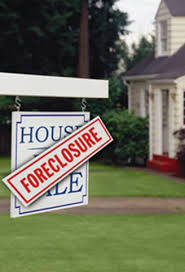
Ring Around the Foreclosure, We All Fall Down


If you've been checking in occasionally, you know that I've been in the middle of the loan modification process for a year. The simple version is that, bottom line, I should not have been given a mortgage...I just didn't have the income. But the banks were anxious to lend and I was confident that we had a plan that would make it work. Then the recession hit.

I haven't missed a payment. I haven't even been late. I was raised to pay my bills in full, on time, and not be part of the chain of delinquencies that cause trouble for everyone down the line. But I'm peddling hard and slipping backwards.

The local foreclosure prevention office encouraged anyone who was having trouble, who foresaw trouble down the road, to start talking to their banks before they hit a crisis point. I did.

We sent all the papers to IndyMac, only to be told that they needed more; they didn't have a program for people who weren't delinquent; they were being sold to One West; they needed us to apply all over again, they needed more. The president announced the HAMP program. I got turned down because they were transitioning to the new program. Please apply again. We did.

The latest word is that they're sorry, they're not yet participating in HAMP after all. They have no program for customers who haven't missed a payment. They'll let me know if they do decide to get on board.

This is, remember, the former IndyMac FEDERAL bank. They got rescued as they sank under the weight of their own greed and were snapped up by OneWest, which has adopted aggressive tactics to make sure customers are paying, including repeated calls demanding payment before the grace period is up.

So I've hit the wall. There is no light at the end of the long tunnel and I'm not even emotional about it. Many people have lost as much or more than I stand to lose.

But I am angry that despite compassionate words from the White House and our elected representatives, what's really happening is business as usual. Banks are seeing the recession as a terrific business opportunity and the Obama administration has backed off on demands for regulation, for common sense, for control of not only salaries, but size. There is no serious talk of reinstating the Glass-Stiegel Act. There is a stirring call from the president for business to regulate itself. That hasn't worked yet and there's no reason to believe it will in the future.

Money, big money, wins.

I have spent a morning with people who are living in low-income housing, trying to find work, lining up at the food pantries for the week's groceries. I'm lucky and I know it.

But the greed of this society, the unbridled lust for more, is destroying our foundation. The middle class is being taxed into extinction yet the burden for caring for the destitute, paying for services and trying to help the poorest among us get jobs, get an education and get on the road to self sufficiency falls on those of us who aren't much better off than they are. Taxes, insurance, the cost of living - they're skyrocketing while salaries are flat and jobs are disappearing.

We're in trouble but the people making the decisions are the ones who are benefiting from this situation.

I'm one of millions. And let me say it loud and clear: This System Is Wrong. Shame on us. It exists because we allow it to exist.

Thursday, March 5, 2009

Foreclosure Help and Hurdles


I did a story on local reaction to the federal foreclosure prevention program announced this week. It was an eye-opener.

First, I got a call from the foreclosure counseling service I've been working with. Yup, I'm on the edge of the precipice along with a lot of other people. And I'd been told there was nothing for me because I haven't missed a payment yet.

But today I was told that the new program has provisions for people who haven't stopped paying their mortgage, whose income to loan ratio is way out of whack thanks to the economy. That's heartening. We didn't buy a house to lose it, but the recession knocked our income on its butt and we've been squeaking for months.

But then I spoke with Republican NY Assemblyman Joel Miller and heard the opposing philosophy in a nutshell.

"We don't have the money to bail out people who are in homes they can't afford," he argued. "People who are still paying their bills will end up paying the tab and that's unfair."

It's the laissez faire argument. Let the chips fall. But as with most things, there are a number of problems tangled into this that one side or the other tends to ignore.

Yes, people who are managing to tread water shouldn't be pulled under by the drowning. Yes, speculators or greedy people who were buying and selling as a business probably should lose out. They gambled and they lost.

But empty houses pay no taxes. And that gap means raising taxes for the people who are left. And empty houses devalue the neighboring homes....continuing the negative spiral that's already leaving us gasping for breath.

The mayor of a local city sounded really angry about the taxes his citizens have to pay. "It's time for the way taxation is done in this state to be reformed. New York is taxing people out of the state!"

And there's another knot in the tangle. Government is a mess. The way spending is handled has been so distorted, so convoluted, that you need a map to figure out how it's done. I doubt it's just New York. There is nothing simple about any of it.
It's so complex we have to pay people or buy software to figure out how much tax we have to pay. And once government has it, it begins its journey into the slithery depths of the bureaucracy.

So how do you argue against preventing foreclosures unless you're prepared to rip open the doors and windows, shine a light on that deep money hole, put on your visor and start counting and accounting for every single penny? And then start making the path from income to spending a more direct line?

It's revolutionary. It goes against every unwritten rule in every legislature in the land. And it may be the only thing that will prevent this from ever happening again.

Sunday, February 22, 2009

Making Lemonade


I recently met Dan Jacobs, the young entrepreneur who started Everywun. Everywun operates on the conviction that doing good is good business. Everywun enlists businesses willing to donate a certain amount of money to a worthy cause, then ties them with a web 'badge' that anyone can put on a website or blog. For every hit on that page, the business makes a donation. And what the business gets out of it is consumer recognition, goodwill and more business. Jacobs says he has studies that prove a customer is more likely to buy from a company it sees as socially responsible. He's a social entrepreneur. He's part of a growing group.

Ode Magazine, my favorite magazine on the planet at the moment, recently did a long feature on social entrepreneurs. They're not starry eyed idealists, though they're certainly idealists.

They're taking advantage of the increasing sense that we're all in this together - as each of us feels the pinch from the economy in lesser or greater degrees, we also are aware that everyone else is feeling it, too. We can curl up in a corner and cry, we can pull the covers over our heads and wait for it to be over, or we can help. That last one seems to feel the best, doesn't it?

http://www.odemagazine.com/doc/61/social-entrepreneurs-mainstream/

Monday, February 16, 2009

Doing the Stimulus Chinese Style


What to do when the bulk of your country's economy is based on what you sell to other countries - and they stop buying? That's the conundrum facing China, which, despite a multi-billion dollar surplus, is seeing its exports deflate faster than a leaky tire.

The local governments' solution is to offer coupons to encourage its own citizens to start buying. Factories are closing in China and the rate of layoffs is increasing. It's the natural response to a lack of demand as export markets hunker down for a long, painful economic contraction. The Chinese government is creating a 585 billion dollar stimulus package that includes subsidies to encourage rural Chinese to go out and buy appliances. But local governments believe more needs to be done - and their answer is to give out shopping vouchers.

The vouchers are time to coincide with holidays and they're working, sort of. Sales are up. But analysts wonder if it will have any long term significance as the country struggles with an economy built on customers from somewhere else.

The vouchers serve an important PR function as well - it's hoped that they will be seen as the government showing concern for its people. And that's important. Because if things continue to worsen and the Chinese don't think they're being cared for, it won't take much to ignite riots. These are people on the edge - and when you're close to the edge chaos is just a short step away.


http://www.atimes.com/atimes/China_Business/KB14Cb01.html

Saturday, February 14, 2009

Just Another Foreclosure


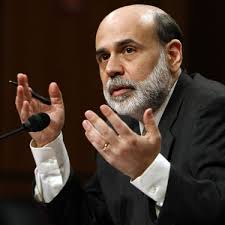
It brings a tear to the eye - the economy has finally touched Fed Chairman Ben Bernanke. The Wall Street Journal reports his childhood home in Dillon, SC, was sold for 83 thousand dollars to a local bank officer. The buyer was suitably respectful of the historic nature of his purchase.

"It's just a great sense of pride to know that one of the greatest leaders we have in our time period walked the same floors I walk," said Travis Jackson, who said he may put up a plaque honoring Bernanke.

The house was sold by the Bernanke family ten years ago. It was then sold again to a national guardsman and his family for $123,000. They lost it when they couldn't keep up the payments.

I won't even comment on the irony.

I've been doing a lot of investigation into the foreclosure issue. Evan Wagner, director of communications for IndyMac Bank, tells me in most cases his bank's hands are tied. It doesn't own a good 80% of the loans it services. And the agreements it has with the banks who do own those loans specify that it can't negotiate with borrowers until they've missed at least two and sometimes three payments.

So people who know the wolf is at the door and try to talk to a bank before it's too late don't have any options if their loan is with one of the giant lenders. Local really is proving to be better.

There's word that the Obama administration has some plans to alleviate the foreclosure crisis. It's certainly not part of the big stimulus. And without it, it seems to be a foregone conclusion that we're just throwing good money after bad.

Thursday, February 12, 2009

The Economics of Marijuana


A recession can do funny things to people. It can make some staunch red states rethink their stance on marijuana.

Okay, let me preface this with a disclaimer: I am not a pothead. I'm not a liberal, raving "right to get high" activist. I'm a pragmatist.

And so, apparently, are Tennessee, Alabama and Texas, among other states. They're looking at the looming catastrophes that are their budget deficits, comparing those with what they HAVE to spend by state and federal mandate, and looking for places to cut. And that's where marijuana comes in.

Law enforcement across the nation spends up to seven billion dollars a year enforcing laws against marijuana, according to a study done by Doctor John Getman.
And states are now considering whether they can afford to keep enforcing that prohibition, according to NORML, the marijuana law reform lobbying group. They're getting phone calls from states they never expected to hear from, legislators looking for the hard facts about marijuana, medical marijuana, scientific data...information they are using as they decide whether it's time to decriminalize marijuana.

There's a precedent for this. FDR partially repealed prohibition during the Great Depression. It made sense. It was an industry that was in demand, it was an industry that could be taxed. And regulating that industry eliminated the criminal distribution of booze.

This seems to make sense with marijuana, too. Studies don't agree on the "gateway drug" argument - in fact, the biggest study on the topic concluded there was absolutely no evidence that marijuana use led to harder drug use. There is apparently no evidence that anything in the chemical makeup of marijuana leads to cocaine, crack, heroin, meth or any of the other drug scourges of our time. The actual gateway drugs were cigarettes and alcohol.

And there is a great deal of evidence that medical marijuana is a gift for cancer patients. It relieves nausea, restores appetite and does it instantly, with no need for a queasy patient to swallow anything. And it's far cheaper than a legal marijuana alternative pill that often isn't covered by insurance.

Millions of people use pot. Millions of them. Nobody's monitoring it except the police. Tons of illegal marijuana is brought into this country from elsewhere, and there is no quality control.

There is money to be made. Think of the money if pot was taxed at the same exorbitant rate as cigarettes. California has medical marijuana and though it accepts tax payments from those clinics, it doesn't officially tax it. And safety standards, legal regulations could be put in place.

Want to do some investigating? Here are two studies:

Http://prohibitioncosts.org
http://drugscience.org

And here are the facts presented with no bias for either side.

http://procon.org

Saturday, February 7, 2009

YES! The good side of the economy!

It's almost horrible, yet somehow very comforting. For the first time ever, poor people are happier than rich people.

How can this be, you ask? Well, it actually makes sense. If you're poor, nothing's changed for you, has it? Life was tough before and it's still tough. In fact, prices are coming down a bit.

But if you're rich, whoa Nellie! You're scared to death - you might lose your job - maybe you invested your big bucks with a shyster - maybe your stocks have tanked. You might become gasp MIDDLE CLASS!

http://www.huffingtonpost.com/david-henry-sterry/poor-people-happier-than_b_164772.html

Now of course nobody's talking about the middle class - we working shlumps who go to school, get a job and then work fifty weeks a year fifty hours a week to make ends meet and try to afford a vacation once every five years or so.

We didn't lose anything with Bernie Madoff. Most of us don't have any stocks, except for maybe a 401K through work that's now worthless. Our lives go on as before, except maybe it's becoming less likely that our kids will be able to get the education we had. The other big change is that we're not talking about retirement anymore. We don't expect to retire. Even if we want to. We're going to be working until the day we die and we just hope we can stay healthy and keep going.

Maybe this economy will level out the playing field a little. Maybe it's time we finally realize we're all in this together - and maybe it's time to grow up, reach out and all work together.

Are you listening, Congress?


Thanks to the Huffington Post for this one.

Why I Love Rachel Maddow


I'm no groupie. I'm not a gay activist. I hate television and I hate myself when I sit in front of it, mindlessly flipping around.

But I love Rachel Maddow and an hour with her makes me feel pretty damned good about our chances.

Rachel, if you have somehow missed her, is the snarky host of MSNBC's The Rachel Maddow Show. She's got a radio show on Air America. She's the smart ass kid you wanted on your softball team, and she's all grown up and poking holes in political stupidity - no matter what side of the aisle it's on.

Ignore what MSNBC's done to make her acceptable to mainstream America - turned a shortstop into a glamor girl with flappy eyelashes. Listen to her.

She's intelligent, she backs up her opinions with fact, and she cares. When she's outraged, she doesn't mince any words. But she never descends into shrill rants. Take a note, Fox News. Aw, let's be even handed here - Keith Olbermann might want to borrow a page from his protege as well.

Last night, Rachel discussed the stimulus.

She devoted her show to debunking what she called "bull pucky" arguments against the stimulus plan, and arguing against the compromises that were made to get it past the GOP objections.

She gave facts and figures showing that tax cuts don't stimulate the economy nearly as well as infrastructure spending and funding food stamps. And she was clearly outraged that common sense gets shouted down by partisan fighting. She cited studies I've heard before but she gave them a national voice, and she said what I've been thinking myself. If Congress can't shut up, grow up and get to work bailing out this boat, it's time to toss them overboard.

And I'm predicting when this time passes, when history looks back, Rachel Maddow, along with Jon Stewart, are going to prove to be two of the most important voices for this era.


http://www.msnbc.msn.com/id/26315908/

Monday, February 2, 2009

It's Worse in Japan

The US is moaning by the side of the economy, clutching its cuts and bruises and complaining that the ambulance is taking too long to arrive.

Japan is lying quietly nearby, bleeding to death.

Frank Veneroso, who's invested in hedge funds for the World Bank along with many other big, big clients, says the Japanese economy is in the worst state ever - already worse than America's Great Depression. Industrial output could take just four months to fall almost as much as the total decline during the 30s in the US.

This is straight from Veneroso:

I have been writing about an Asian black hole for almost two months now. I have been crying from the rooftops about an emerging depression in Japan. It has been as though a neutron bomb had gone off in the world. There was no one who seemed to notice, no one who seemed to listen.

Every week it gets worse and worse and worse. Today it was Japan....

THERE HAS NEVER BEEN DATA THIS BAD FOR ANY MAJOR ECONOMY – EVEN IN THE GREAT DEPRESSION. December industrial production came in down 9.6%, worse than the METI forecast. It is now down almost 21% year over year. METI forecasts a further 4.7% decline in February. The inventory to production ratio soared again. Maybe METI will be correct.

If it is, Japan industrial production will have fallen 28% (non annualized) in four months. It will have fallen by a third in about a year. Nothing in the history of major nations compares. A 28% decline in four months would be more than half of the entire decline in U.S. industrial production over the 3 years and nine months of the U.S. Great Depression.

It would be a greater decline in four months than in any 12 month period in the Great Depression in the U.S. We are literally looking at the unimaginable. (I am attaching the U.S. industrial production index from the Great Depression for comparison).

IT’S A DEPRESSION IN JAPAN – ALREADY – PURE AND SIMPLE.


And who's compounding this mess, essentially guaranteeing that there's no saving the Japanese economy? Financial markets. They haven't learned a damned thing from the death spiral on Wall Street. Markets, according to Veneroso, are making Japan's injuries fatal by pushing the yen as a "safe haven" for investment as it teeters on the brink of disaster. In other words, investors are pushing the price of a yen higher and higher with nothing supporting it from behind. Sounds disgustingly like the real estate bubble, doesn't it? And yet it's happening. Again.

More from Veneroso:

The yen is strengthening massively against currencies all over. On a trade weighted basis, it is by far the strongest currency on the planet. There are long lags between changes in currencies, exchange rates and trade. The recent take off in the yen is not yet fully reflected in Japanese exports. The lags are too long. The weakness we are seeing in Japanese exports today is in large part derived from aggregate demand weakness from its trading partners. It is the result of an earlier appreciation in the yen for perhaps 120 yen to the dollar to 110 to the dollar or 100 to the dollar. And perhaps, most importantly, it is the result of a secular trend in which its lower wage neighbors in Asia are making inroads – big inroads – into the global markets which it has traditionally dominated as an exporter.

When the long lags between the yen exchange rate change and trade and industrial production fully run their course the land of the rising sun may fall off the face of the earth. And with it will fall all the market participants who refuse to look at fundamentals and chase chart witchcraft and ephemeral market dynamics who have been the big bulls engineering that yen exchange rate that will maximally undermine the markets, economy, and social fabric of Japan.


Thanks to http://www.nakedcapitalism.com/

Sunday, February 1, 2009

Economy Hits Sports, Too


Thanks to Handsome Significant Other for this one:

It didn't take long for the recession to spread its effects into one of the most overpaid segments of the economy - sports.

The release of Joe Torre's tell all Yankees book came along with revelations that Yankees pitcher Andy Pettite ran into the "New Economy" head on. The team offered the veteran 10 million dollars to re-sign. Nope, said Pettite. He was looking for 15 million. And after shopping around, discovering nobody, just nobody, was going to pay him that amount of money, he came back to the Yankees and said okay. He'd accept 10 million. The Yankees said no go. The offer was now 5 million. And he took it.

It's not so much a reflection of Pettite's skills, though he is certainly not a young buck anymore. It's the economy. Even the legendarily generous NY team is tightening up the spending for most players.

There are 30 free agents in major league baseball, all looking for new teams. Being a free agent used to be the holy grail - once you reached that status, you were pretty well assured of a mind-bogglingly large salary after a heated bidding war among MLB teams. Not this year.

Manny Ramirez, for instance, never expected to still be without a home this late in the winter. And he's got an agent who's considered a master of the negotiating game. But so far, only the Dodgers are playing - everyone else would love to have him, but the salary he would command is a luxury now.

The economy is bound to hit the teams where it hurts - in the wallet - and they know it. The rising costs of ticket prices have put a day at the ballpark well beyond the comfort level of most fans. Boston, the most expensive ticket in baseball, had an average fan cost index in 2008 of $321. That's the estimated cost of a day at the park for a family of four, according to the Team Marketing Report.

Sixteen of the thirty teams are freezing or cutting ticket prices in 2009. They are anticipating trouble.

The Super Bowl isn't immune - secondary ticket prices are down almost 40%.

So what's next? Movies? Films, during the Depression, were one of the few things that saw a steady business. We loves us our escapism when times are tough. But movies aren't cheap to make, actors are remarkably overpaid, and the prices at the ticket counter have risen steadily. And they're not the only game in town now. We've got DVDs, we've got BluRay, we've got television and we've got Hulu.com.

Marketers in every sector are responding to the new national mood - Allstate encourages us to insure what we've got with a company we can trust - Walmart is positioning itself as the place to save money and downsize. It's a new world. And indications are it's going to be around for awhile.

Maybe stickball is going to make a comeback.


http://mlb.mlb.com/news/article.jsp?ymd=20090128&content_id=3780812&vkey=perspectives&fext=.jsp&c_id=mlb

Friday, January 30, 2009

More Economy Rioting


There was chaos in Paris and trouble all over France as citizens protested the government's handling of the global economic crisis.

Marchers threw bottles and overturned cars in Paris. Flights were cancelled, train and bus service were impacted as workers went on strike, demanding action from the government. Unions say 2.5 million people rallied across France. The government puts the figure at a million.

Most of the anger is directed at President Nicolas Sarkozy, who is seen as sympathetic and helpful to business, while not helping citizens who are increasingly desperate.

Do you have any doubt that this is just the beginning?

http://www.ft.com/cms/s/0/71c25576-eda6-11dd-bd60-0000779fd2ac.html

Wednesday, January 7, 2009

Stories From the Second Depression - Part One

I won't mention his name, but he's someone I've known for years. He was a friend of my father and as I grew older, he became my friend, too. He had no children and his longest term relationship lasted about ten years, but he never married.

He worked for a major city as an engineer. He was good at what he did, he was proud of his work. I've heard horror stories about months on projects in derelict neighborhoods where he never felt safe. He worked hard. He saved his money.

He retired to New Mexico about fifteen years ago and he should have had a very comfortable retirement. He invested in stocks, in gold, in a house, and he had money left over to help a friend put herself through school and, eventually, pay her daughter's tuition when she got to school age.

He's over seventy and had a health scare last year - his knees were already gone and now his heart was acting up. There was talk of an open heart surgery. He, instead, went on a strict healthy eating and exercise regimen (he swims, as it's the only exercise his arthritic knees can handle) and he's dodged the surgery so far. He loves good food, he loves to go watch the trains that pass through the small town near his home. He has a cup of coffee in the same place with the same people every morning. He likes his life.

He called me when Lehman Brothers collapsed.

"I just lost eighty thousand dollars in one day," he said. He wasn't angry, just incredulous. The anger came later.

As the economic news continued to worsen, he saw most of his savings evaporate. His phone calls, begun as a way to help me past my father's death, have become a place where he can vent.

"This isn't how my life was supposed to be. I was always careful with my money. You know me - I squeezed a nickel until it screamed. Thank God I paid off my house when I saw this coming - but now I may have to take out one of those reverse mortgages. I worked all my life to be sure I wouldn't have to worry about money."

His story is like many others across this country and around the world. He started off at an advantage - he had savings to lose. But that advantage is nearly gone. What about the elderly people on fixed incomes who have no cushion at all?

There's a price to this economy that we're not talking about yet. There's a depression going on - an emotional depression. Young people are worried about their future. Parents are worried for their children's future. People at or nearing retirement age are the ones most concerned - they have no time, no possibility to retrench, rebuild, start over.

Growing old isn't easy - there are aches, pains, limitations and the forced acceptance of mortality. Now there is an added worry - what will they do if the money runs out?

Saturday, December 13, 2008

Madoff: The Last Straw For Wall Street?


It seems the days of equating "Wall Street job" with prestige and money are as extinct as the dodo bird. Tell someone you work on Wall Street and if they don't sneer or throw vegetables at you, they're at least going to shake their heads. Thank Bernie Madoff. His 50 billion dollar shell game may be the weight that sinks Wall Street's floundering reputation. Even hardened Wall Streeters are professing shock at the size, scope and audacity of Madoff's scheme. He's taking people down with him, and the Dow is expected to be dragged down as well. It's massive.

There's an angle here no one is talking about for fear of being offensive, but I'm wondering.
Did Madoff have a Jewish connection? Did he take advantage of a cultural sense of loyalty to line his own pockets?

One NY Times article quotes Palm Beach investors with names that seem to indicate Jewish backgrounds. A charity in the Boston area dedicated to preserving Jewish cultural identity has lost everything with the collapse of Madoff's fund. Did Madoff, whose fund was built on exclusivity and reputation, take advantage of connections that leaned heavily toward Jews to build his massive scheme?

And if he did, is this the latest kick in the teeth for people who are just a generation removed from the Holocaust?

What the fall of Bernard Madoff proves is that just because someone knows what they're doing, because they appear successful and even show steady growth, it doesn't mean that you can trust them.

The Jews have a word for people like Bernard Madoff: shyster.

Saturday, December 6, 2008

Oh, Canada

To my neighbors to the north,

My sympathies. Truly. Your country, for many of us in the lower 48, has always been a symbol of a simpler, more functional place. You have socialized medicine and you're where our young men fled for shelter when Washington looked for human fodder for the Vietnam war. We have a sentimental and totally uninformed belief that it's somehow better in Canada. I know people now who have been frantically planning their repatriation in an effort to leave a country that elected George W. Bush for two terms. And now the news from your part of the continent sounds a lot like what we've been through for the past eight years.

Your government is resisting acknowledging that Canada is in a recession. Like us, your problems have been building for some time and are now are crashing in on you. And sadly, like us, you have a leader who is said to be highly partisan, secretive and clueless. According to what I read, your Prime Minister faced a vote of no confidence next week because his Conservative party has failed to offer an economic stimulus package. And instead of facing the problems, his solution was to shut down Parliament.

You must be reeling. We know the feeling down here, Canada. For eight years, we've watched civil rights erode in the name of national security. We've watched the opposition party frantically try to object, try to create a coalition, and fail. We've acknowledged that our government has been run by a pack of strategists whose goal was personal gain. We went to war to line their pockets with money. They lied to us to make sure we didn't look too closely. Thousands have died. We have watched our standing in the world community crumble, watched our government slap away offers of friendship after we were attacked by terrorist thugs. We watched thousands of our own neighbors wait in horrific conditions for help that was withheld after Hurricane Katrina. We have been ashamed. And we have nursed a long simmering anger.

Finally, finally we have had enough. It took a combination of anger, fear, a war and an economic crisis to finally get this country to pull in a different direction, and that was aided by an opposition candidate who was finally savvy enough to understand how the party in power plays, and be ready for whatever they tried. It worked. And I cannot explain to you the dimensions of the exhalation that swept across this country after election day. Perhaps you felt it where you are.

We are afraid, Canada. Our economy is as bad as it's ever been. The parallels between today and 1929 are inescapable. But for the first time in a very, very long time, we have hope. We believe that our government is headed by people who will be trying their best to turn this sinking ship around as we all start bailing water.

You are where we have been for the past decade, Canada. Don't wait as long as we did to make sure your government is working for you. We wouldn't wish this on our worst enemies, much less our favorite neighbors.

Tuesday, December 2, 2008

It's Official - December Has Arrived and It's a Recession!


It's taken a year for them to admit it, but the braintrust in Washington is now admitting that we've been in a recession since last December...and that means it's already lasted longer than many past downturns. When will it end? We have to hit bottom first.

Suze Ormon, who I get a big kick out of and whose common sense I admire, predicted the stock market would bottom out at around 8000 when I saw her a couple of months ago. I'll bet she's revised that forecast.

Jim Cramer, the madman of CNBC, is making a lot of 'sell!" noises when he talks about Wall Street and I recently spoke with someone who has done just that. Her broker advised her to pull out whatever she had left and just keep it in cash for awhile. "Wait and see," he said.

My kids, both of whom you might expect to find ensconced in dorms at a college, are each heading to work, with school dropping to a part time activity. It's not because of the economy - their reasons are as individual as they are. But I find myself thinking that perhaps they're doing the right thing - their classmates will be graduating in a couple of years and will very likely be finding themselves doing any job they can get just to make ends meet. At least my kids will be working, hopefully safe on the twin merits of their abilities and seniority.

What about us? We hang on and we hope. It's going to be close. And I take some strange comfort in knowing that as things go from bad to possibly worse, we're all in this together. How can you feel like some kind of cosmic target when everyone you know is facing the same pain?

We will come out of this. Everything is cyclical. And it's this generation's turn to understand what hard times feel like. Perhaps the lessons we learn will make us a better society.

Thursday, November 13, 2008

Oh, Never Mind.

At the end of September Chicken Little announced the sky was falling. Treasury Secretary Hank Paulson wanted money - a lot of money - to prevent catastrophe on Wall Street. Ask me no questions, I'll tell you no lies, Paulson suggested. No strings, no questions, no oversight.

Congress, in one of the few times it managed to overcome its lack of a spine, said no.
No way.

But as Wall Street continued its free fall, it was clear Washington couldn't stand by and do nothing. So they passed the Troubled Asses Regulation Pogrom. TARP was given 700 billion dollars to buy up "illiquid assets"...junk, in other words, that no one wanted to get stuck with. But nothing was going to be done for homeowners across the country who were losing their homes. It would, they hoped, trickle down.

That never did work, but the country is still so enamored of Ronald Reagan that they won't admit it.

So now it's November. Wall Street is still crashing, we have a new president-elect, our outgoing president wants to stay the course, and Paulson has already spent much of the money. AIG's got to be happy - they've gotten a healthy infusion of cash. Of course they're frittering it away and giving the 24 hour news cycle fuel for another turn.

Paulson says the original strategy isn't working. We noticed. And he's already got a whole lot less money to spend than he did. Now he's going to give it to banks. Our president-elect wants an auto bailout. The guy sitting in the Oval Office until January doesn't.

I'm no fan of Detroit, but it doesn't seem like we can afford to let an industry that employs three million people go broke. They've got us over a barrel.

Have you looked at real estate ads in California lately? Look at houses for rent. Look at houses for sale. See what this really looks like. "Live in the style you're used to - for less!" promises one ad. "$200/month off NOW!" says another. "Good credit required...income of 100K verified before approval." It's an economy sliding out of control. It's worse in some places than others, but it's going to spread.

And Hank Paulson's the guy holding the money. Unfortunately, not only does he not know what he can do to help, he seems to be one of those people who won't listen to anyone else. So we'll just keep sliding until January, then hope the Obama transition team has come up with a brilliant plan to help us dig in. And if he has an idea and Congress fights him, there's going to have to be an outcry so loud that they don't dare fight us.